Semena Altaya
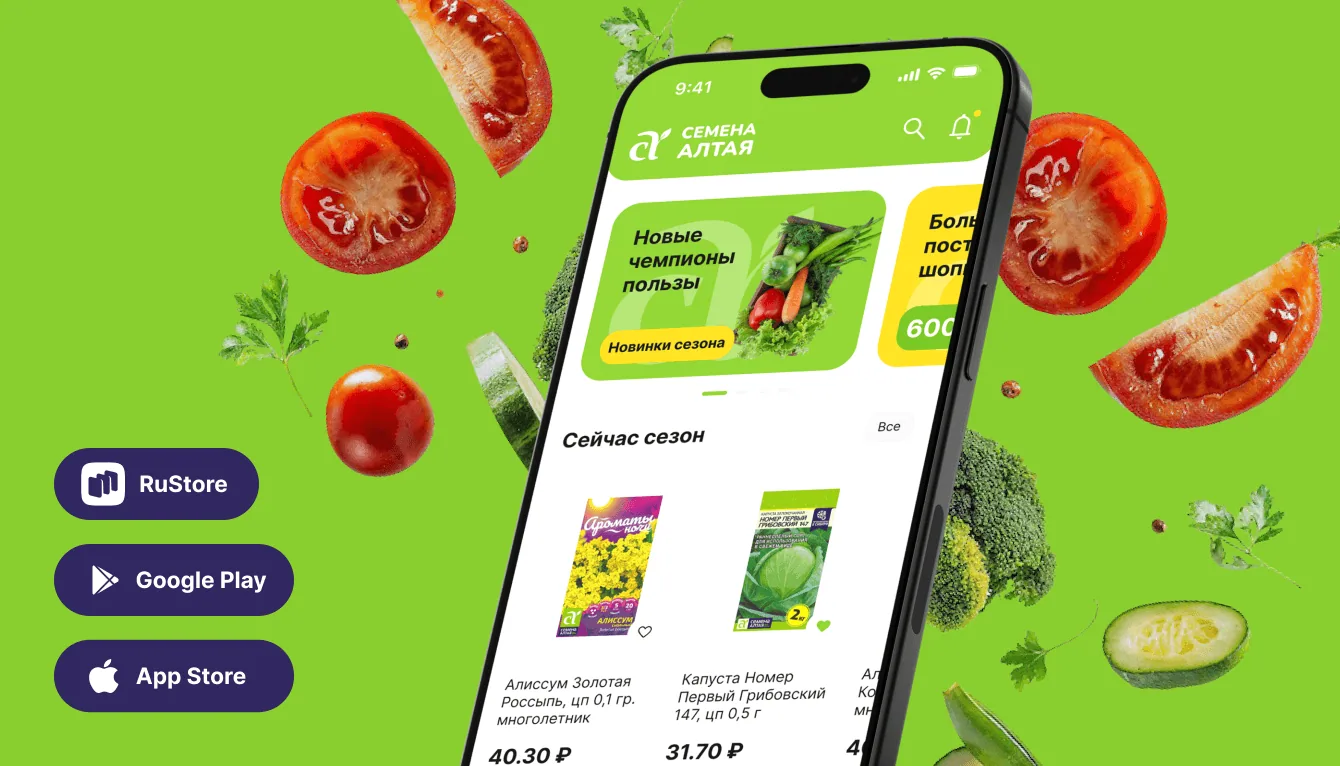
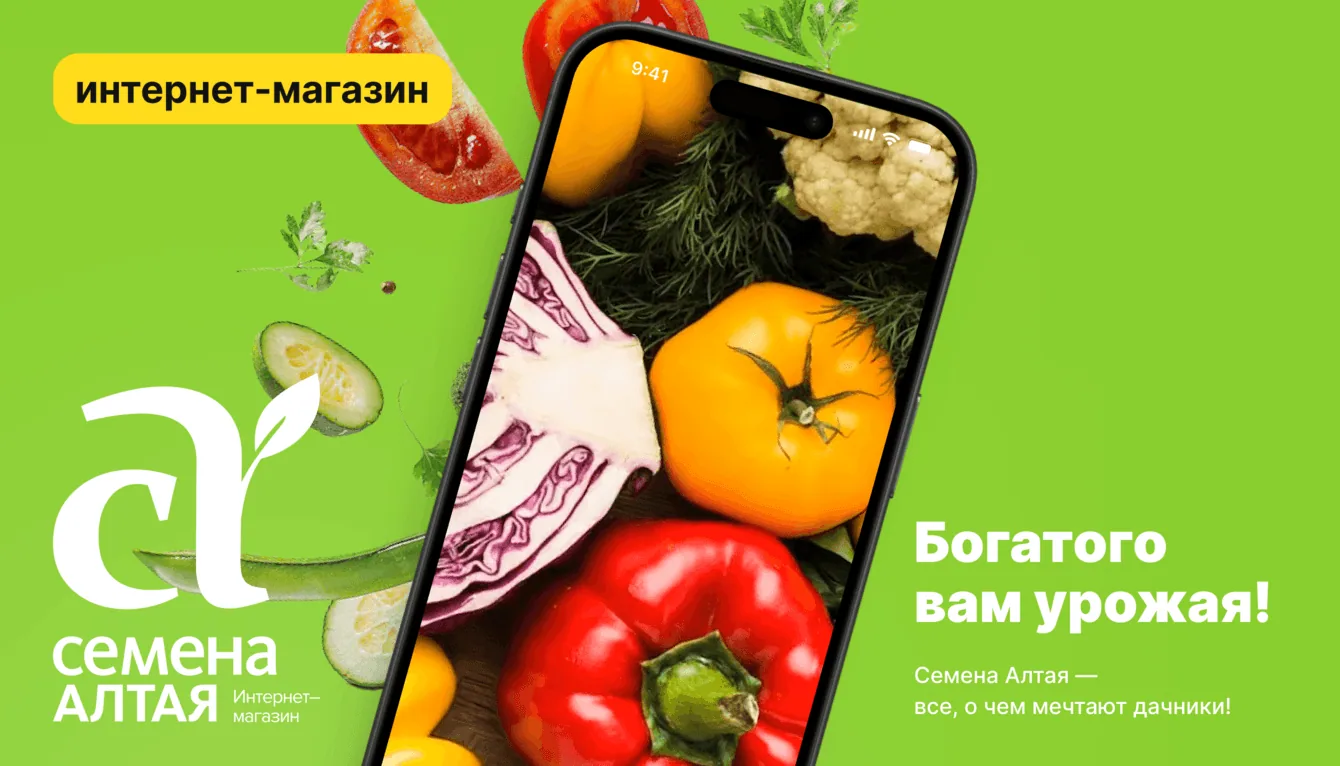
A mobile seed and plant store with seasonal orders and delivery across Russia.
- Our work
- Research · UX/UI · iOS and Android · Laravel · Integrations
- App stores
- App Store · Google Play · RuStore
- Key features
- Seasonal baskets · Laravel Nova · Inventory integration
The business task
Semena Altaya has supplied vegetable and flower seeds for more than twenty years. The client found that 80% of website customers were using mobile devices, which led to a dedicated shopping app.
- Develop a mobile app alongside the existing website, with a separate Laravel backend
- Create a distinctive design while retaining the company identity
- Improve functionality and the customer journey
- Encourage repeat purchases and increase customer lifetime value
Users and repeat purchases
The audience includes enthusiastic gardeners aged 30 to 70. Growing plants is a serious interest for them, and the app has to work for people with different levels of digital confidence.
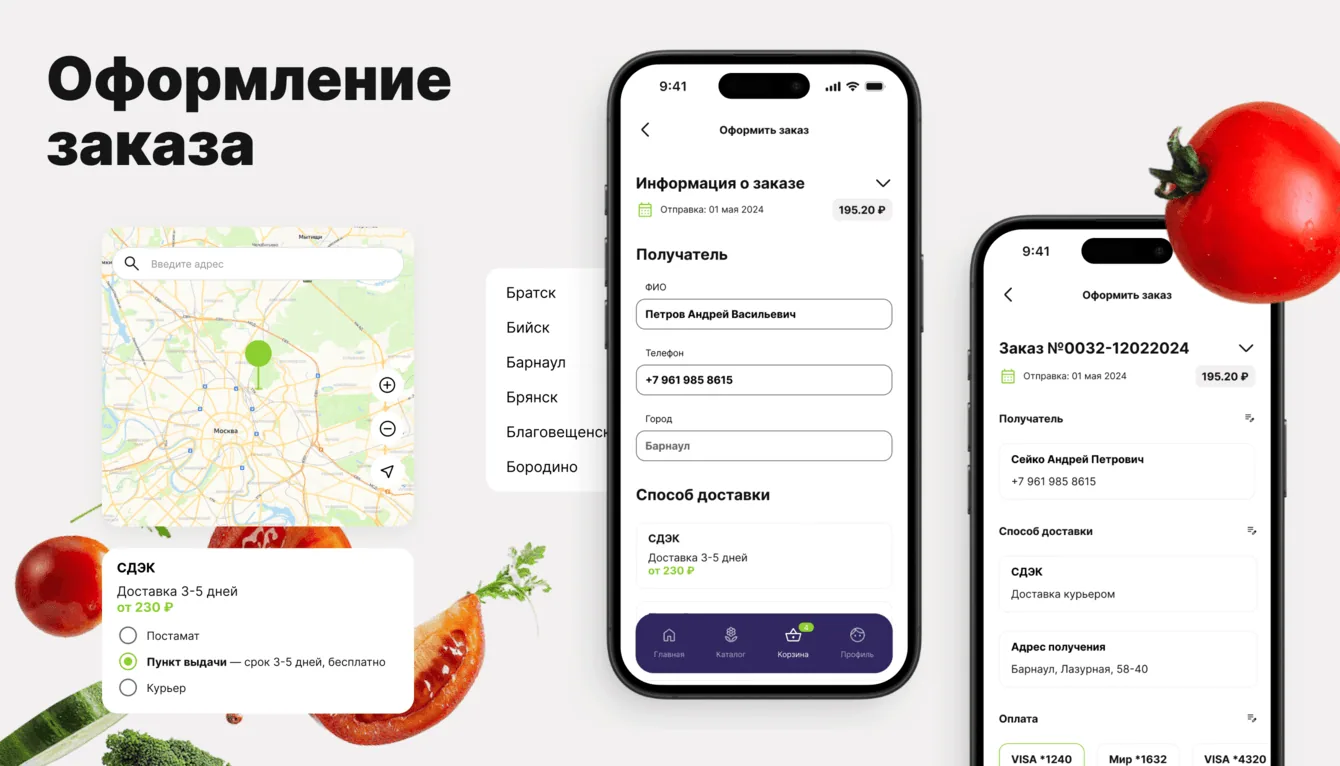
We simplified the main tasks and allowed orders to any delivery address or collection point. Customers can buy plants for themselves or relatives without changing the way they shop.
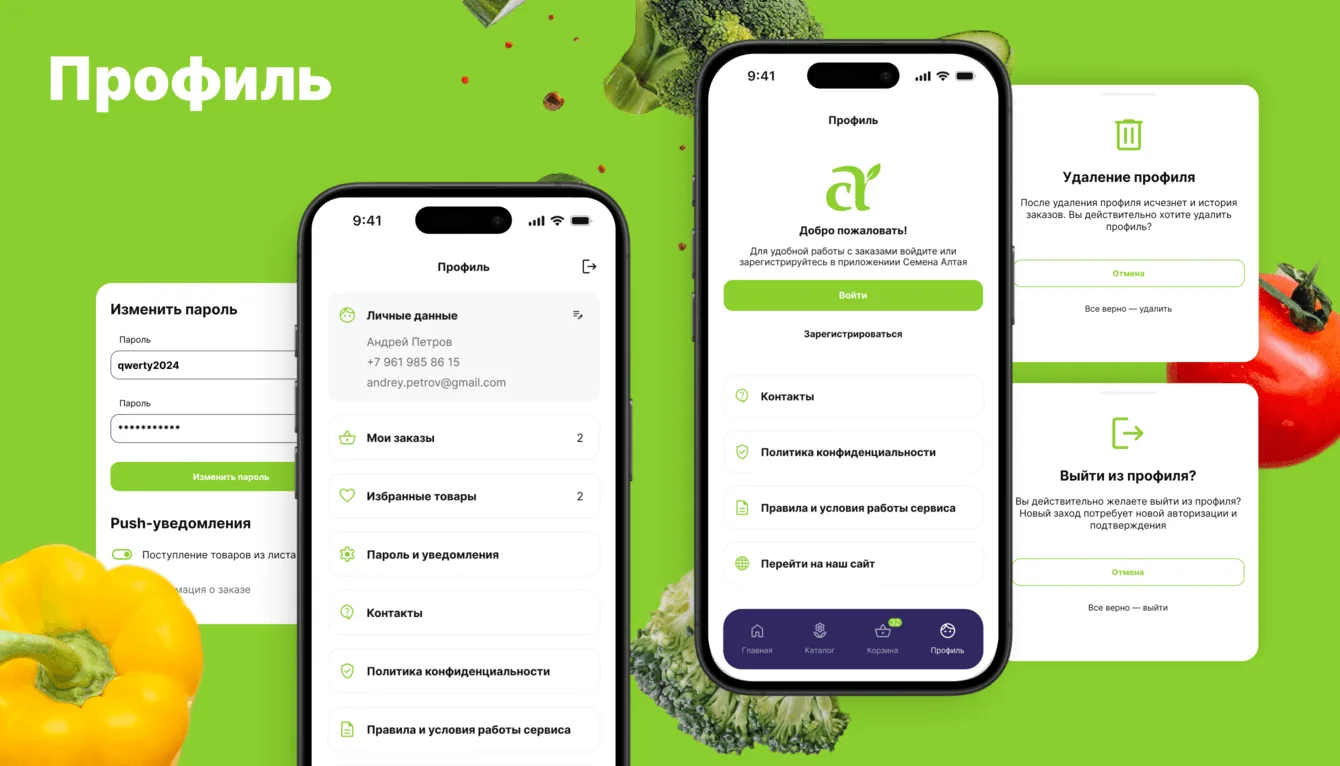
The “Where is my parcel?” button opens the carrier website with the tracking number already entered.
Repeat business was a key objective. Customers can forget which store they used the previous season, especially when franchise stores have similar-looking websites. A recognisable app helps them return to the same supplier.
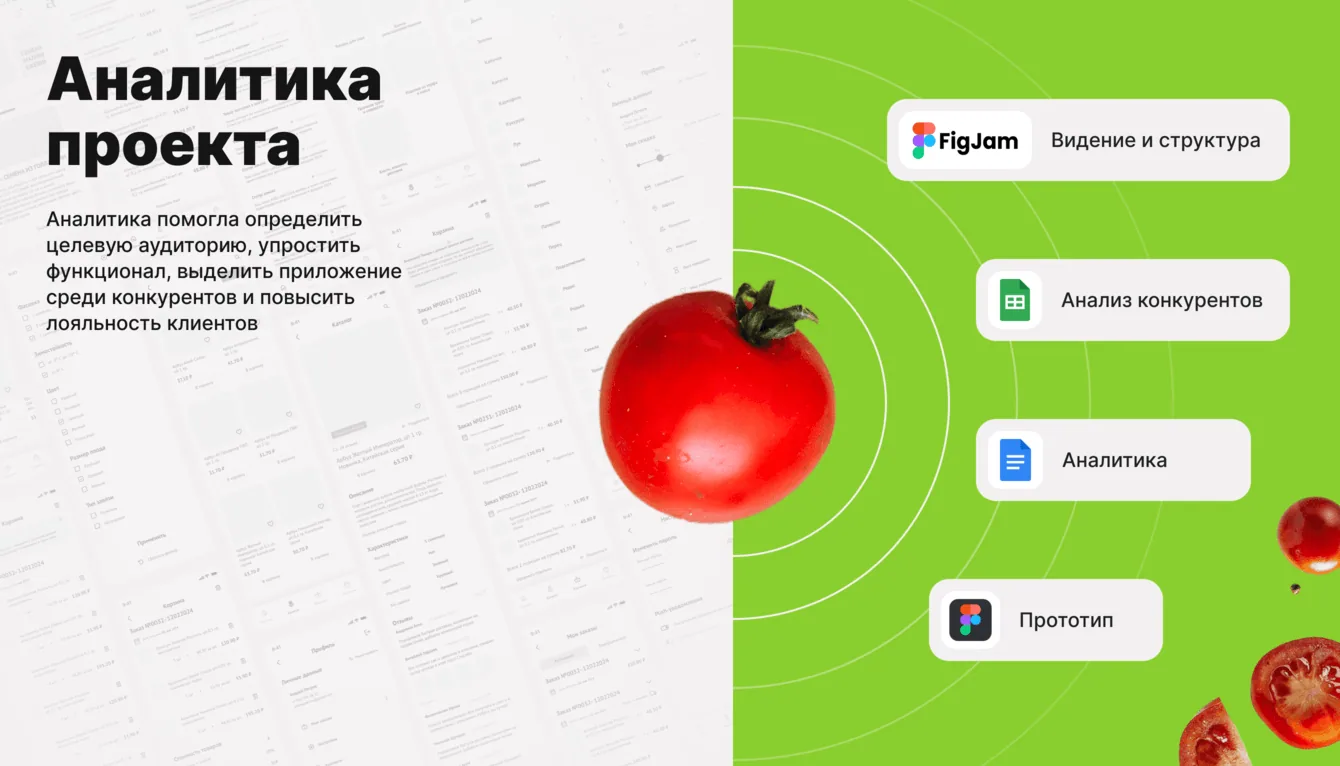
Discovery covered the product vision, audiences, competitors and structure. We also researched payment data storage, app store requirements and the relevant PCI DSS requirements.
Design and microinteractions
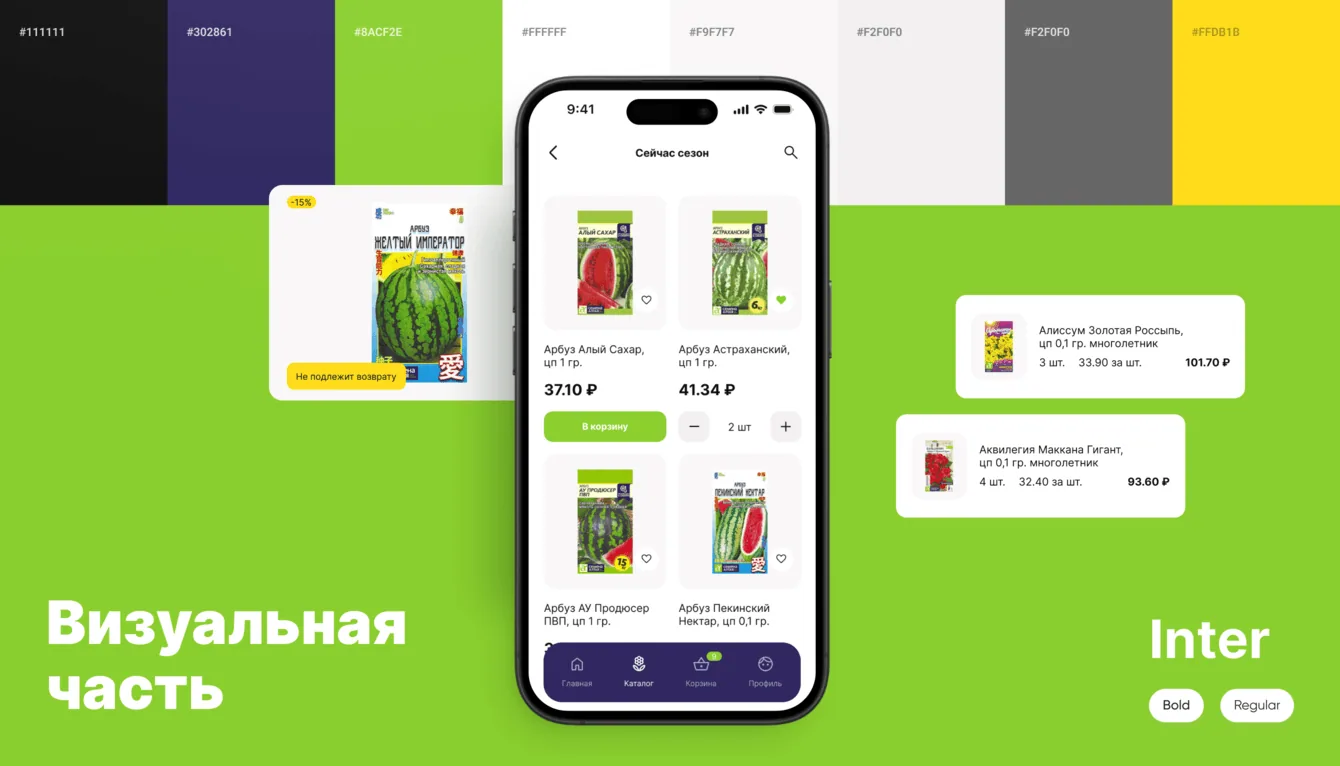
The client gave us creative freedom, with one important constraint: customers still had to recognise the existing brand. We retained its lime-green and blue-violet foundation.
We softened the green and selected readable typography suited to the audience.
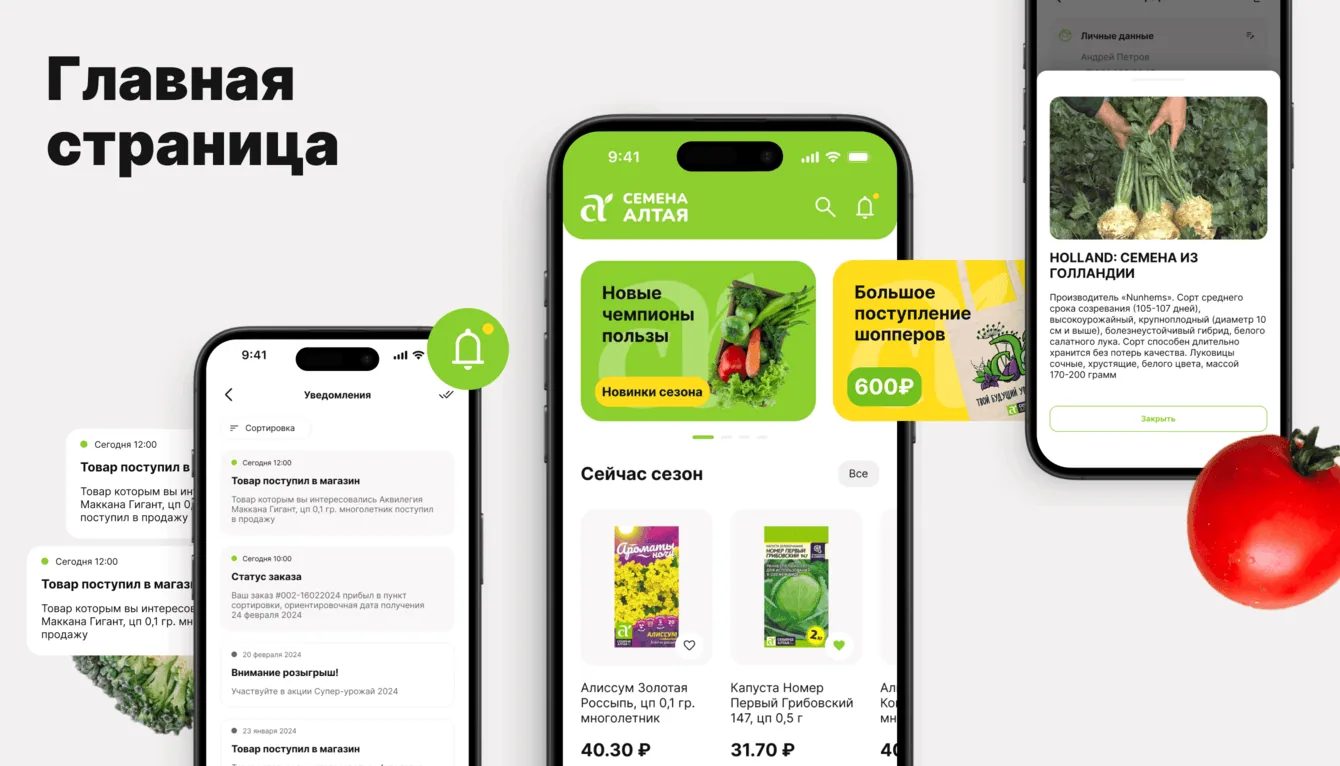
Creative details appear where they help the experience. We animated vegetable photographs with AI for the loading screen and added small movements to tab bar icons when tapped.
Two baskets for seasonal orders
The business has a pronounced seasonal cycle: sales rise in January and continue through the spring planting period.
Seeds can ship throughout the year, while seedlings can only ship in spring. A combined order used to hold up the whole parcel, generating complaints and manual work for managers.
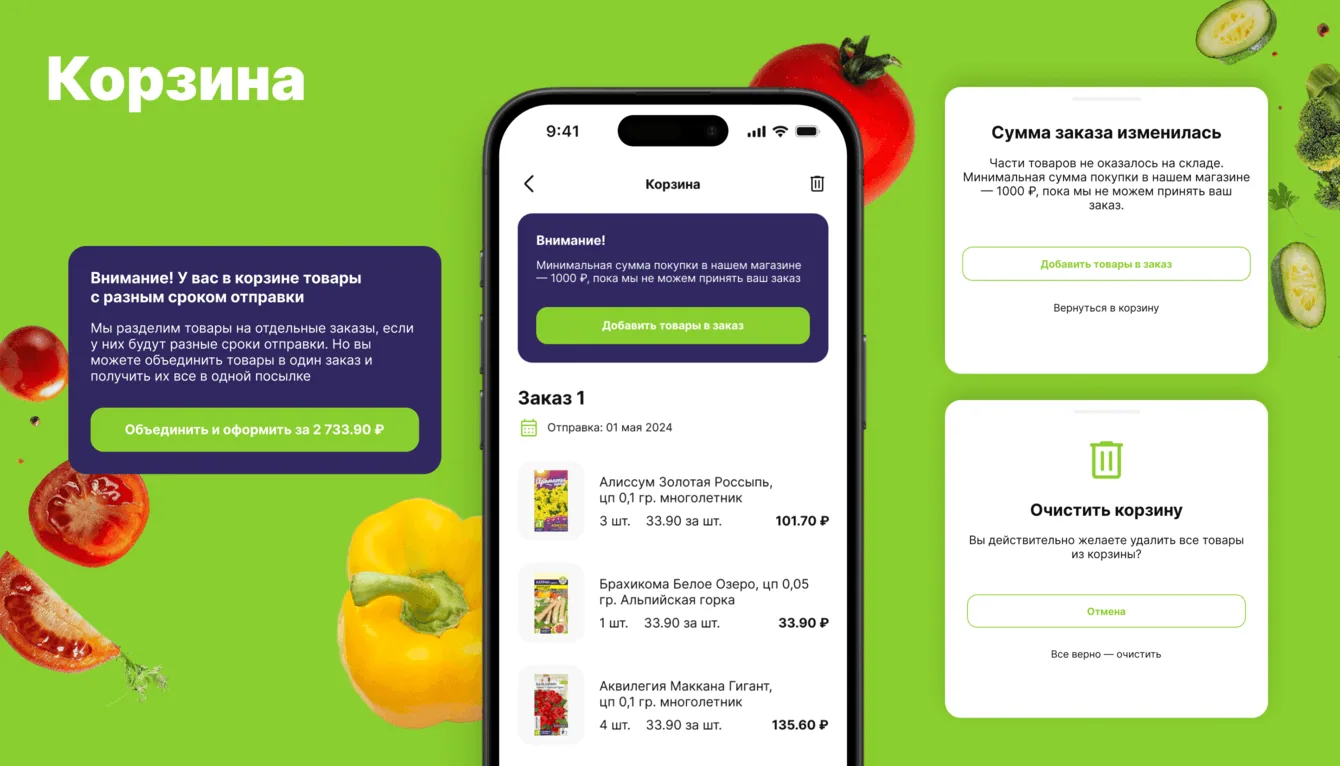
We automated the split by introducing two baskets:
- Products that can ship immediately, such as seeds
- Products that can only ship in spring, such as seedlings
Explanatory messages help customers choose between separate shipments or one spring delivery. That removes the need for managers to split every mixed order by hand.
Store management and payments
We built a Laravel Nova administration panel for products, banners, discounts and personalised push notifications.
- We integrated SDEK, Boxberry and Russian Post delivery, Yandex Maps and DaData
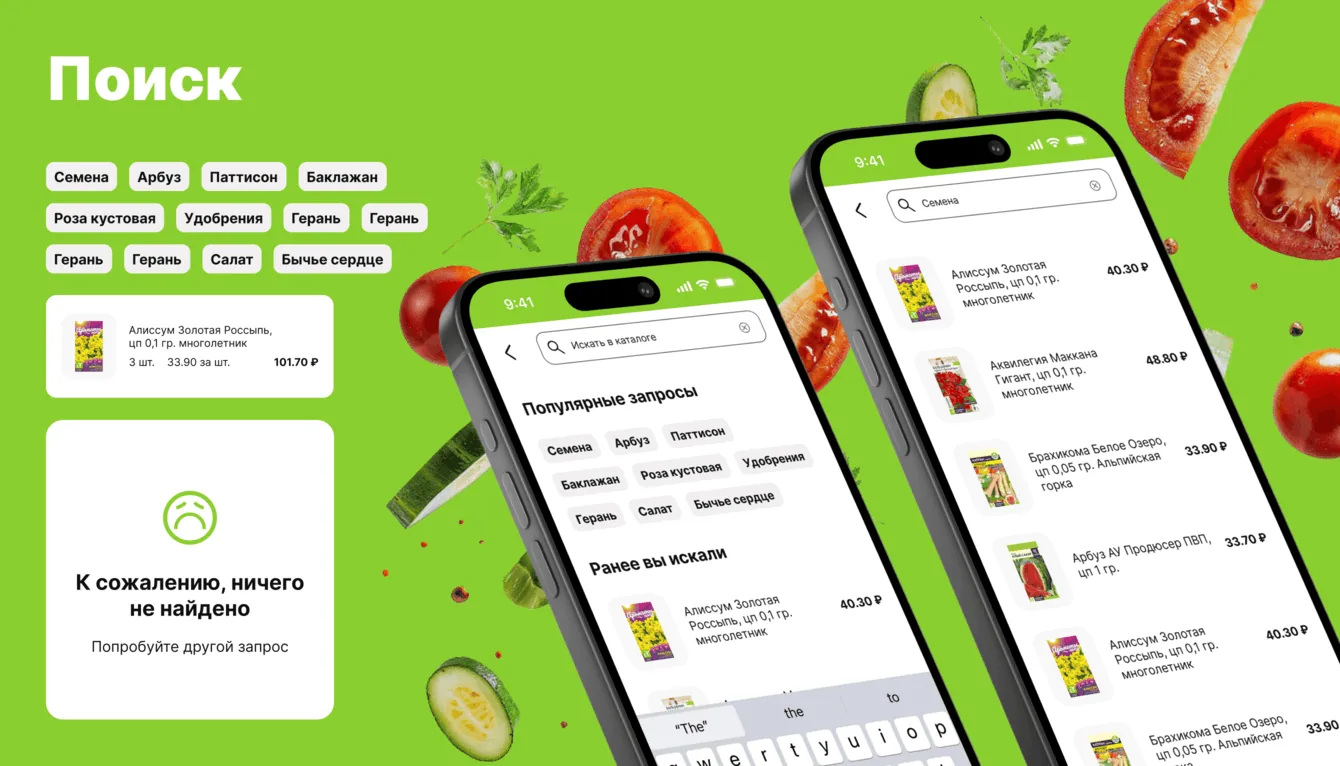
- Product filters support categories, product types, special offers and discounts
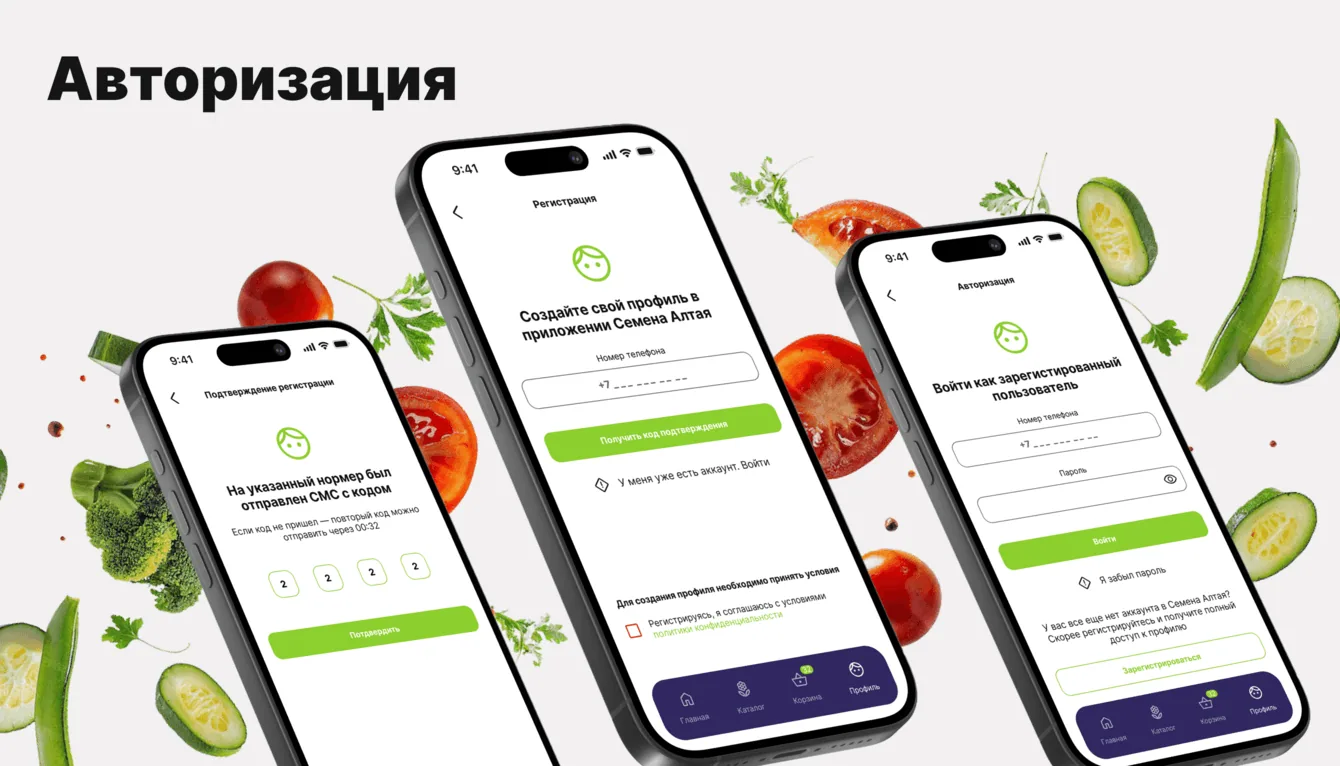
- Onboarding and ordering instructions help new customers get started
Payment data research was needed to assess saved bank cards: returning customers should not have to re-enter information unnecessarily.
The existing website could load card details after Sber ID sign-in. We assessed storing that information in the app itself and decided against it after considering the extra complexity for a niche store.
Synchronisation and loyalty discounts
The client operations revolve around an inventory system and a business management service that combines CRM and staff communication.
We first mapped how the website, inventory system and management service exchange customer and product data and how often those updates happen.
The business management service became the central integration point, receiving customer data and passing product information from the inventory system.
Integration documentation was limited. Some material described a different core version or another product and could not be used for this system.
The main difficulty was synchronisation: small price differences, missing parameters and inconsistent category names could interrupt processing.
We reproduced synchronisation locally and traced failures back to individual products. That exposed issues such as unexpected folder names or seedlings filed under seeds.
Together with the client developer, we introduced methods and algorithms that handle those cases as part of normal operation.
Another problem involved loyalty discounts. Older orders were archived by the management system, so customers could lose an earned discount when their order history became unavailable.
We changed discount assignment to use customer groups instead of relying on the age of an order. The groups retain the applicable 5%, 10% or 15% discount.
App launch
The client was open to questions and new ideas, which helped the project move forward despite the integration work.
The MVP launched in November 2024 on Google Play, RuStore and the App Store. The store found its own audience alongside the major marketplaces.
In the first two months, thousands of customers downloaded the app and began placing orders. The product became part of the client’s existing business processes.