FSSP.RF
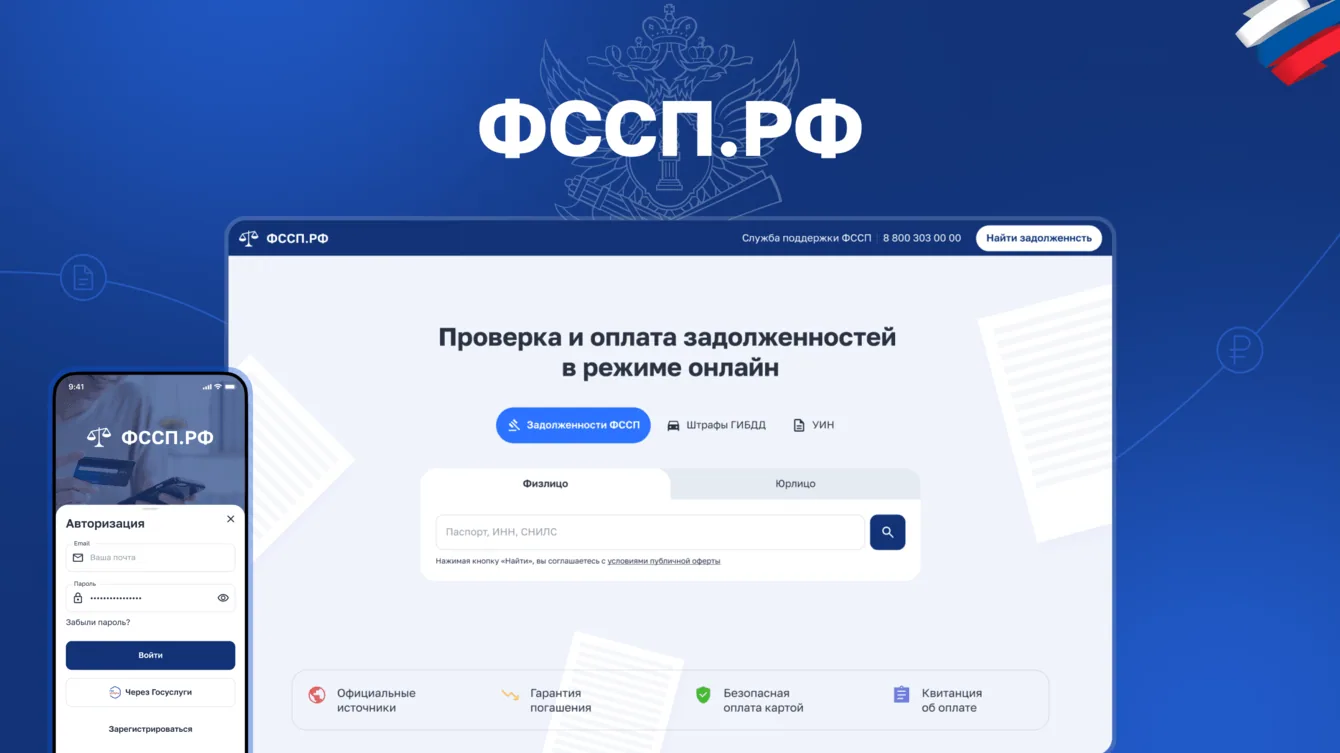
A website and app for checking and paying enforcement debts and traffic fines.
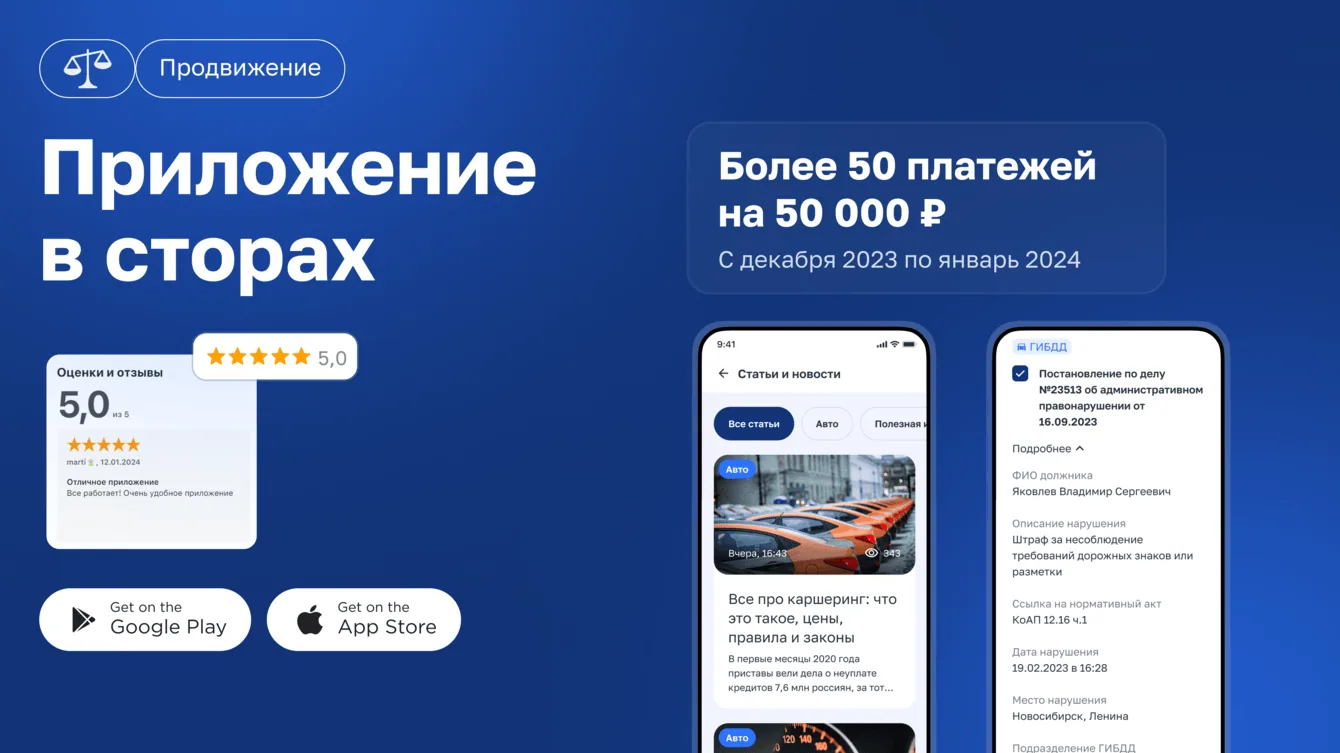
Results for December 2023–January 2024, as reported in the original article
- Our work
- Research · UX/UI · Web service · Mobile app
The task and product scope
The client commissioned a service for finding and paying enforcement debts and traffic fines.
The product needed a clear journey from search to payment, with explanations that help users understand what happens to their information and their transaction.
- Design search flows that make the required data clear
- Provide one backend and API for the app and website
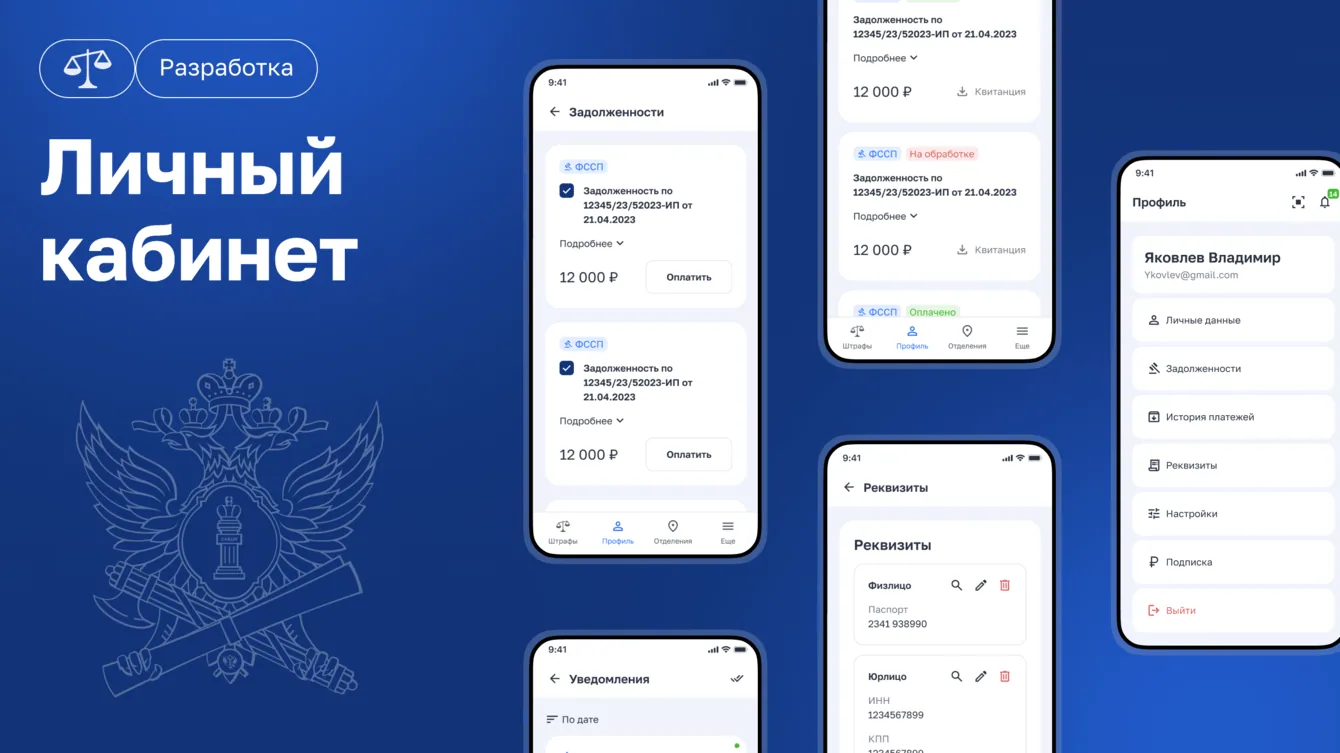
- Build a customer account
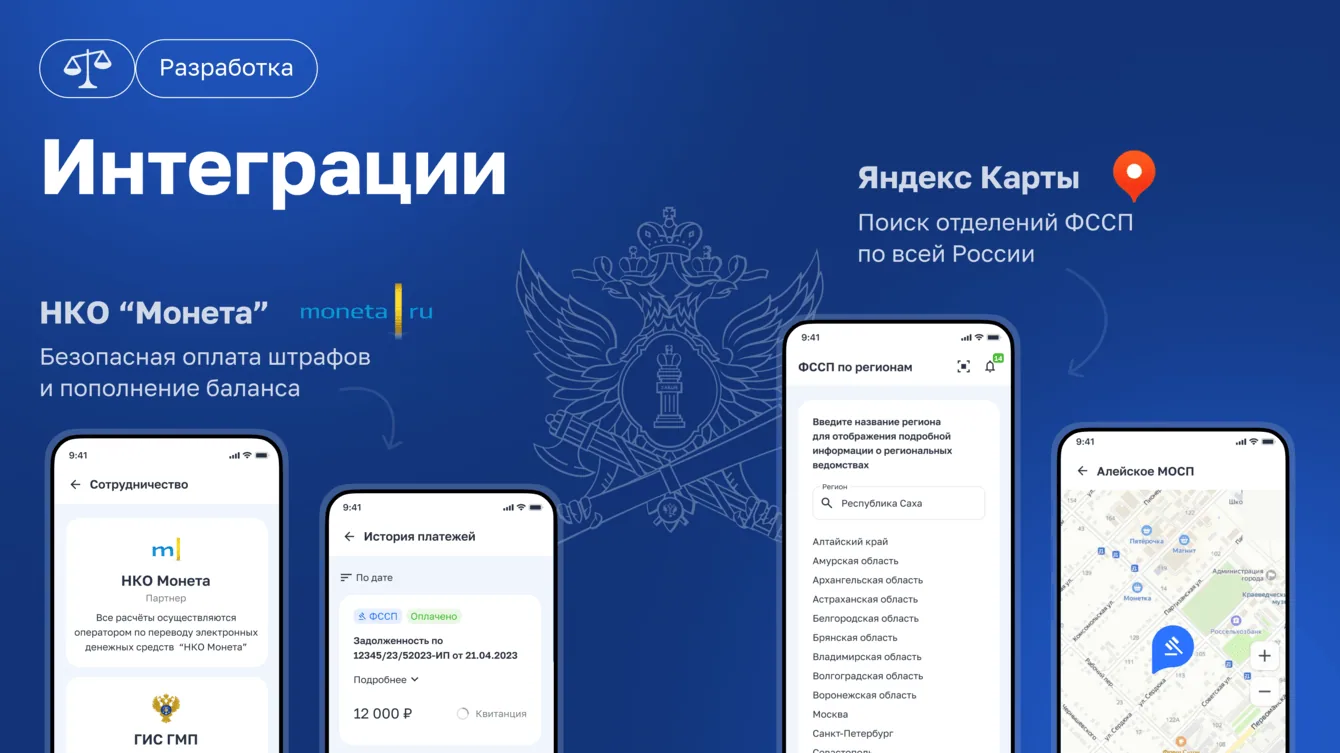
- Integrate Moneta payments and Yandex Maps
Trust and payment clarity
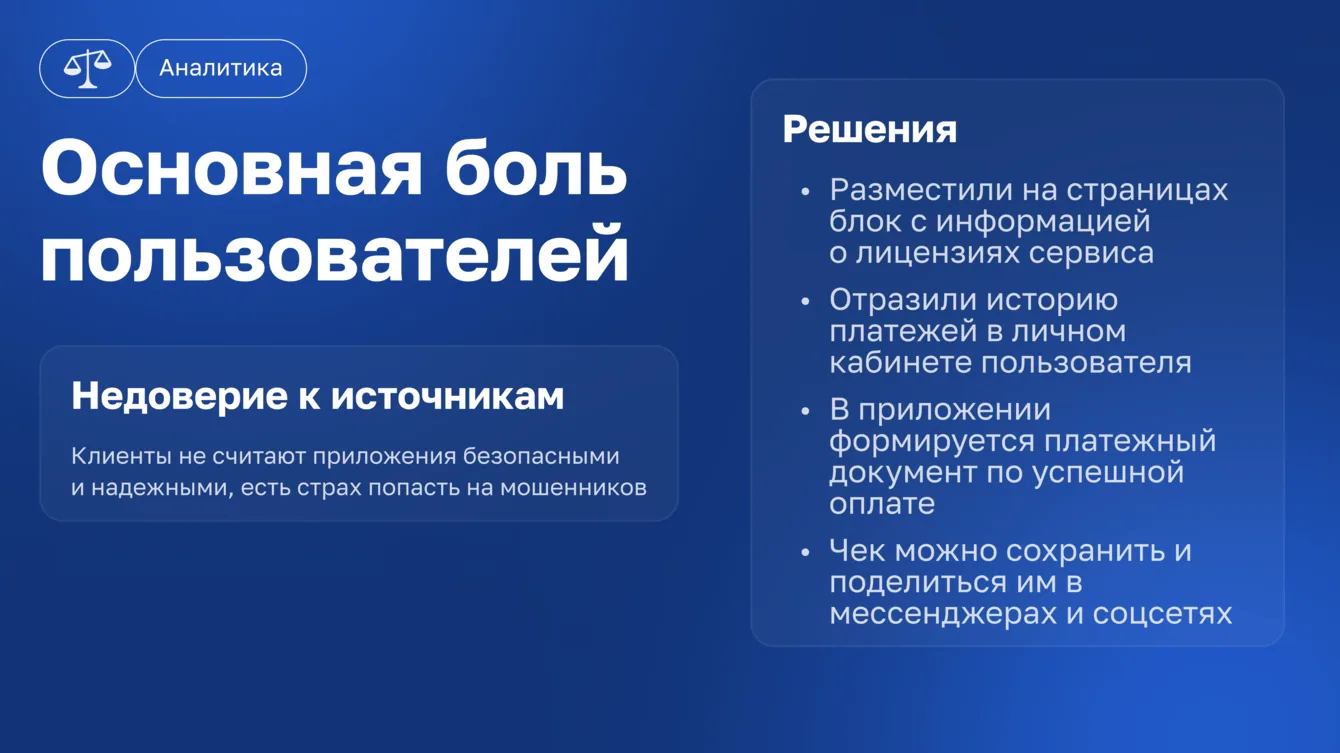
Competitor research showed a recurring concern: customers often distrust independent services that accept payments and store personal information.
- Information about payment licensing
- Payment history in the customer account
- Payment documents that users can save or share
- A directory of enforcement service offices with regional search
Payment and debt status do not necessarily update at the same time. We added explanations of the process, payment details that users can save and answers to frequent questions.
- Notifications about new customer enquiries
- Replies with attached documents from the administration panel
- Shared management of text and media content for the website and app
The resulting structure includes the product homepage, debt search, articles, regional offices, FAQ and a feedback route.
We reviewed app store requirements during discovery, including account deletion and user data controls, so that development would not overlook requirements needed for publication.
Website and app design
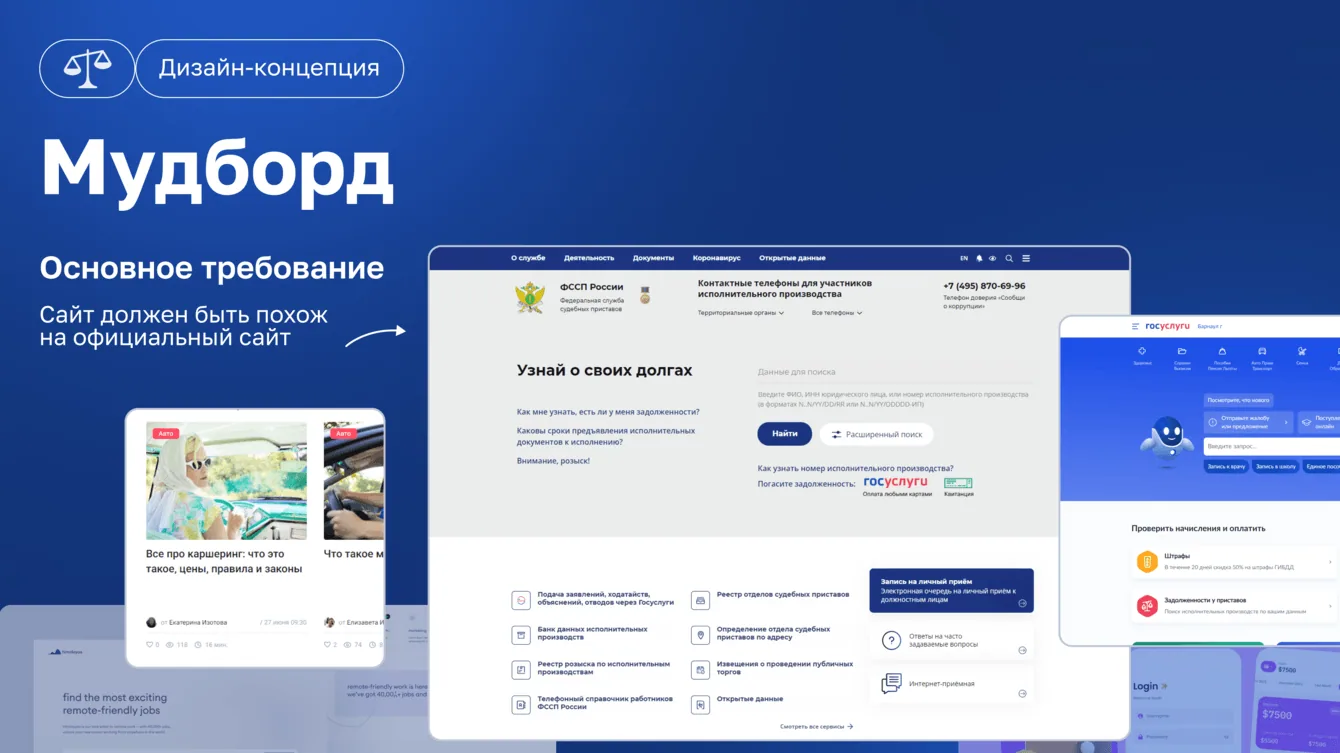
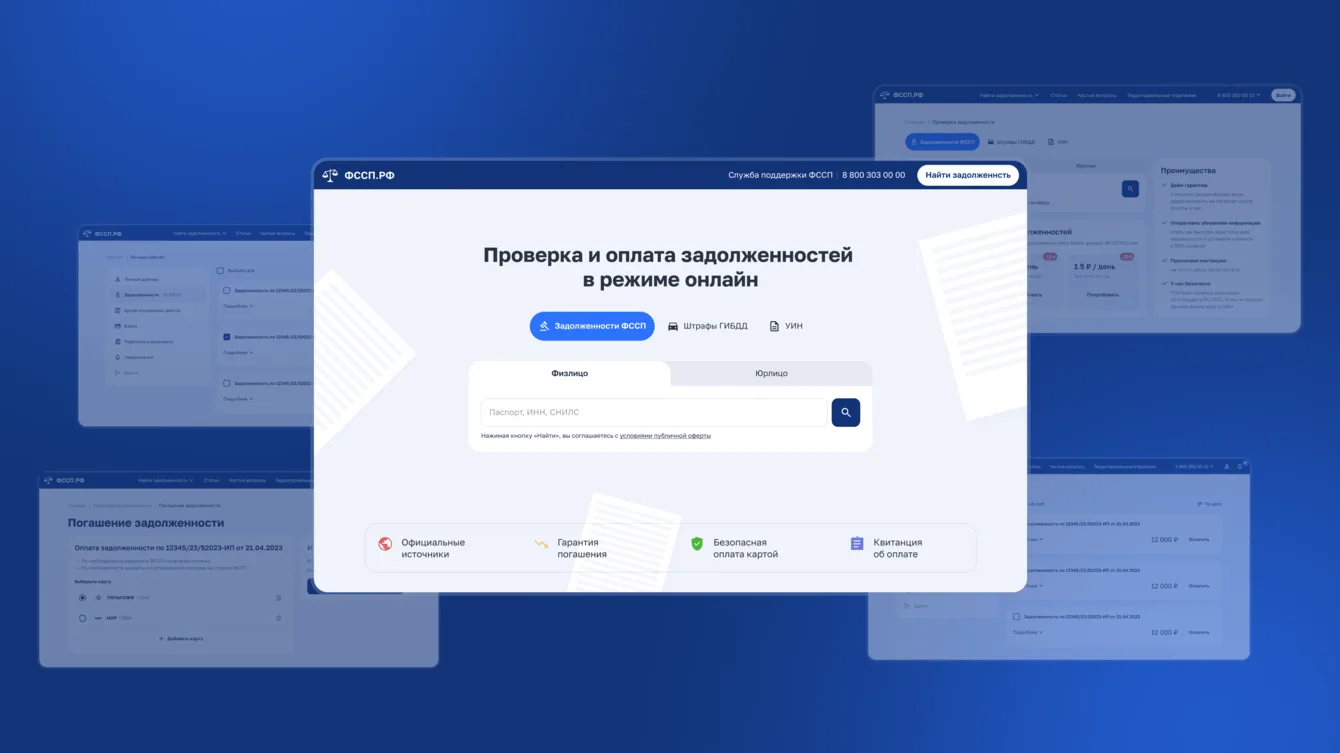
The client asked for a restrained, orderly interface. We developed a blue-and-white visual direction familiar to the audience.
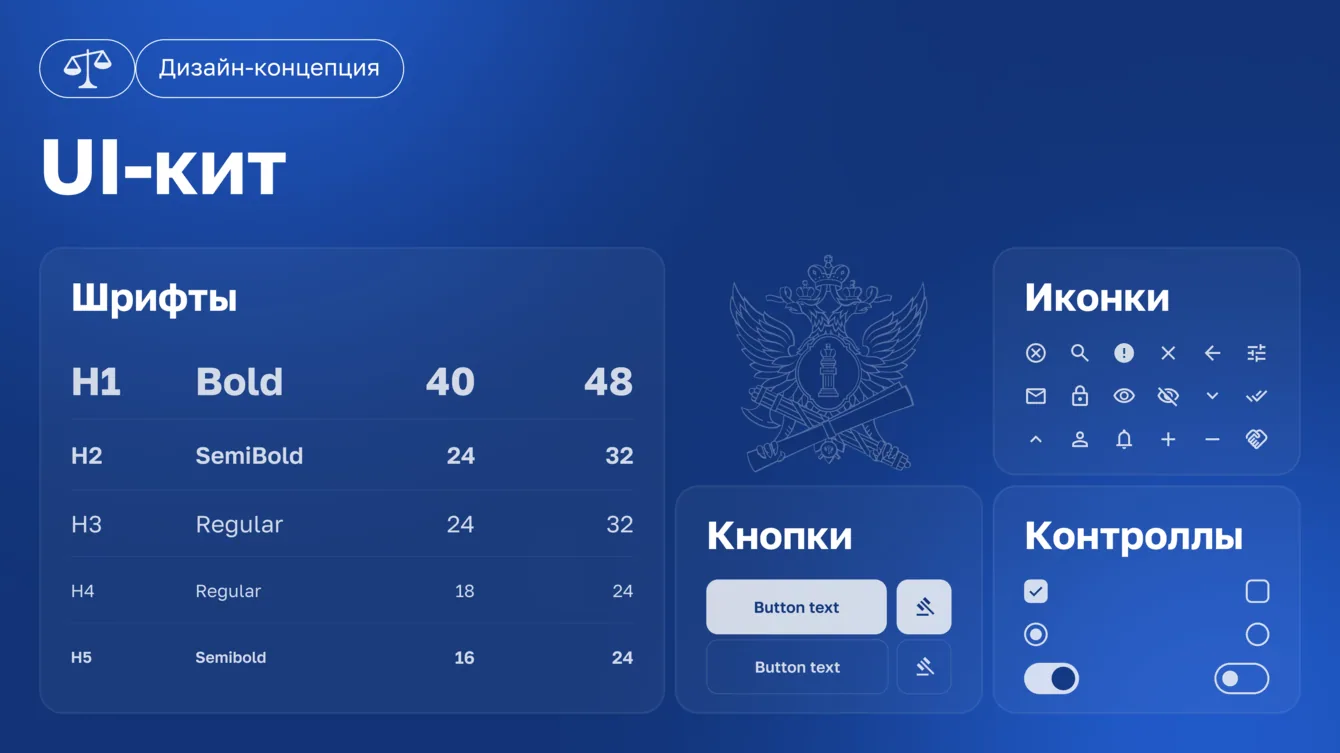
We designed control states, accent details, icons and map markers, then assembled the UI kit and more than 100 website and mobile layouts.
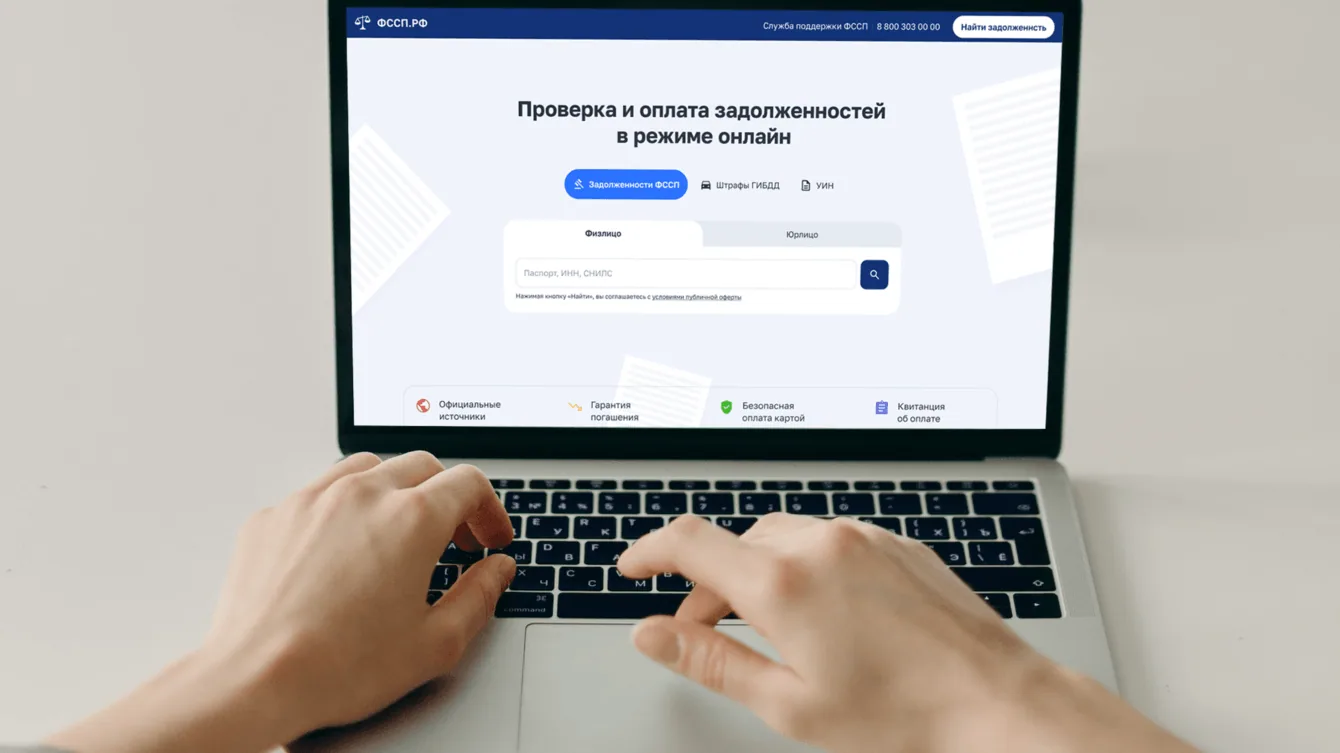
The interface keeps attention on the main tasks: checking debts, understanding the result and making a payment.


Flutter, search and synchronisation
The initial idea was a website followed by a WebView app. We proposed a Flutter application and a web service with reusable implementation work.
We developed the app first, then reused parts of the code for the web version, reducing duplicated work and delivery time.
We grouped the many search categories into a smaller set of understandable choices.
Enforcement debt search supports individuals, companies and sole traders, with different identifiers for each group.
Traffic fine search supports vehicle registration or driving licence details
Users can also search by a charge identifier that specifies the payment details
WebSockets provide two-way updates between the client and server. The service can display notifications and changed information without making users refresh the page.
Authentication uses access and refresh tokens. When the access token expires, the refresh token renews the session; if renewal is unavailable, the user signs in again.
Accounts, payments and maps
The account stores search history and fine information, supports payments and keeps receipts available.
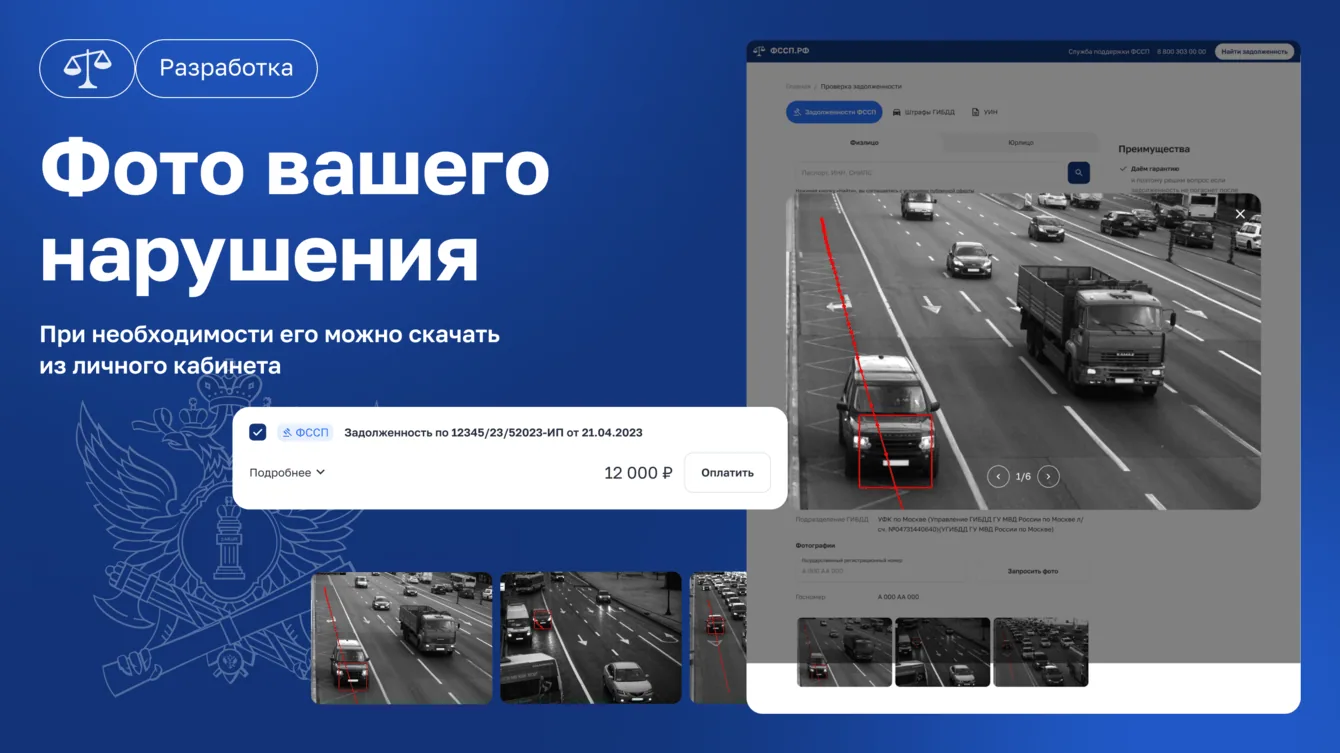
Users can request a photograph of a recorded traffic offence and save or print it when needed.
Moneta was selected for payments. We worked through its documentation and defined request and response handling for each transaction.
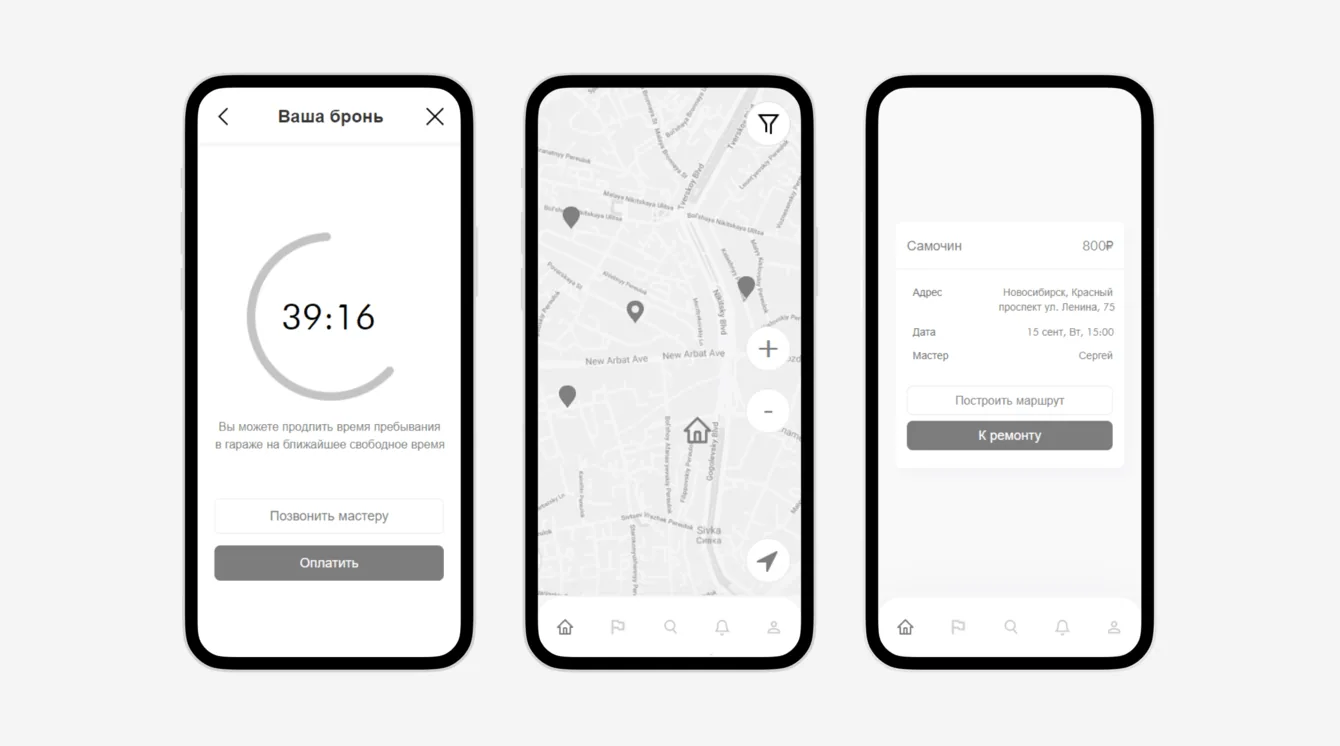
Yandex Maps lets users find enforcement service offices, addresses and opening hours inside the app.
Testing and publication
We manually checked functions and responses on different Android and iOS versions, using network traffic inspection to investigate issues.
Postman collections supported backend API testing and documentation.
We also created a server-side request library and checked responses in both the website and app, with browser DevTools for frontend investigation.
Testing caught problems with sign-in, session tokens, validation and payments early in development.
We prepared the builds and marketing material, checked the required data controls and submitted the app for store review.

Early launch results
Results for December 2023–January 2024, as reported in the original article
The website and app launched on 29 December 2023. Users can find debts, keep search results in their account, make payments and obtain payment documents.
- Between December 2023 and January 2024, more than 300 people downloaded the app without paid store promotion. During that period, the service processed 49 payments totalling RUB 50,000.
- A shared backend and cross-platform implementation reduced duplicated development across a product with several user flows and external integrations.