Serviko Auto
A tablet app connecting drivers and dispatchers through routes, documents, messages and trip monitoring.
Figures at the time the case study was published
- Client
- Serviko Auto transport company
- Our work
- Discovery · UX/UI · Mobile development · Backend · Integrations · Testing
Project overview
Serviko Auto needed to connect drivers and dispatchers. Standard navigation apps did not always account for truck restrictions, arrival times were hard to predict, and trip documents were lost or delayed.
We built an enterprise Android tablet app. Drivers receive routes and assignments, submit documents and talk to dispatchers, who can monitor changes and adjust the work.
The brief
The goal was to combine navigation, documents and manager communication in one tool. It needed delivery schedules, route deviation alerts, driver and vehicle records, and integrations with fuel services and the Road Network platform.
The app had to work on corporate tablets during real trips, at night and without a stable connection. We handled discovery, interfaces, mobile and backend development, integrations and testing.
What we did
01 / Understanding dispatchers’ work
We studied the client’s processes and navigation apps. We designed the structure and an arrival-time prediction formula, first validating it with the client in a spreadsheet so dispatchers could anticipate whether drivers would reach the next stop on time.
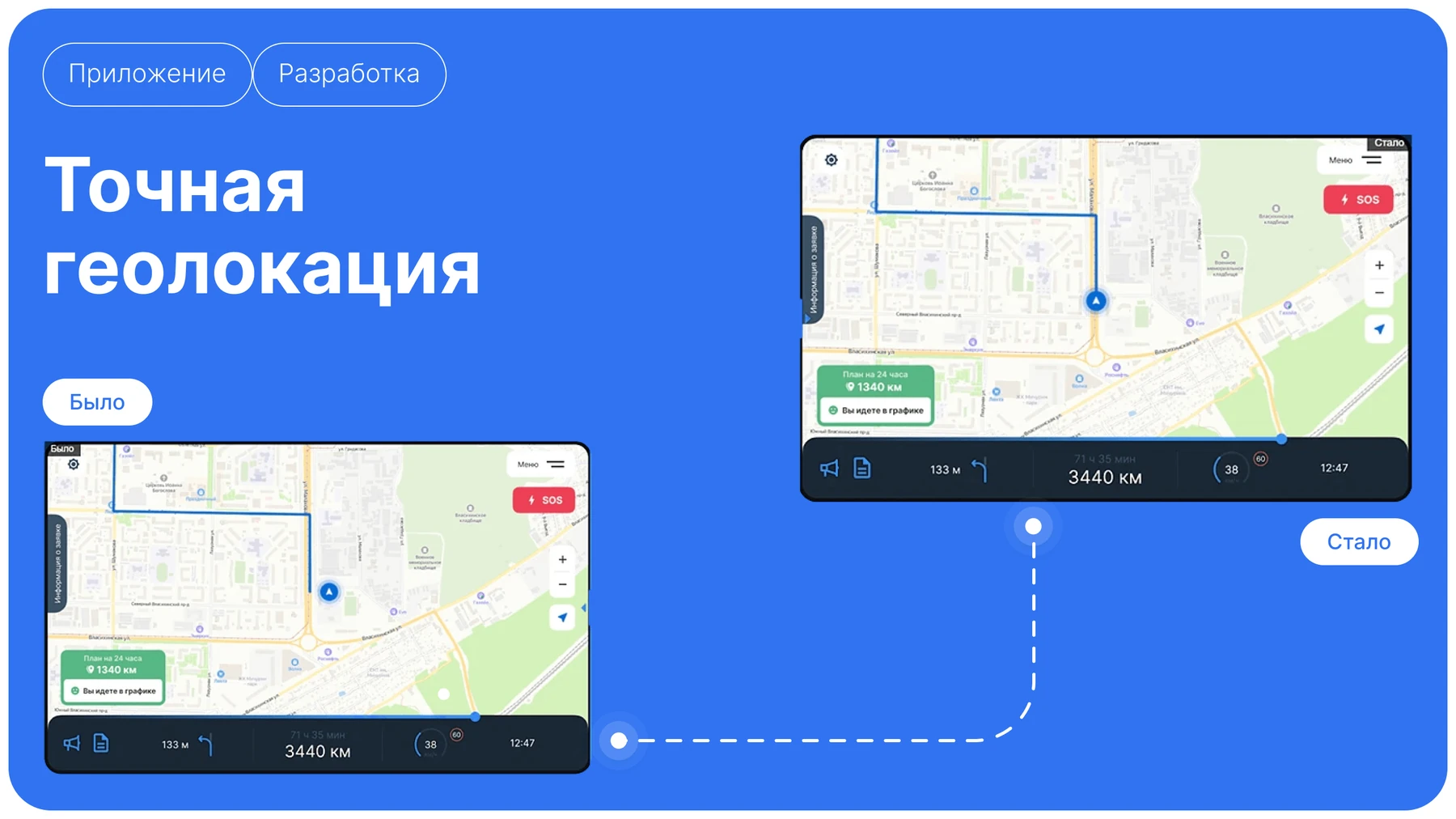
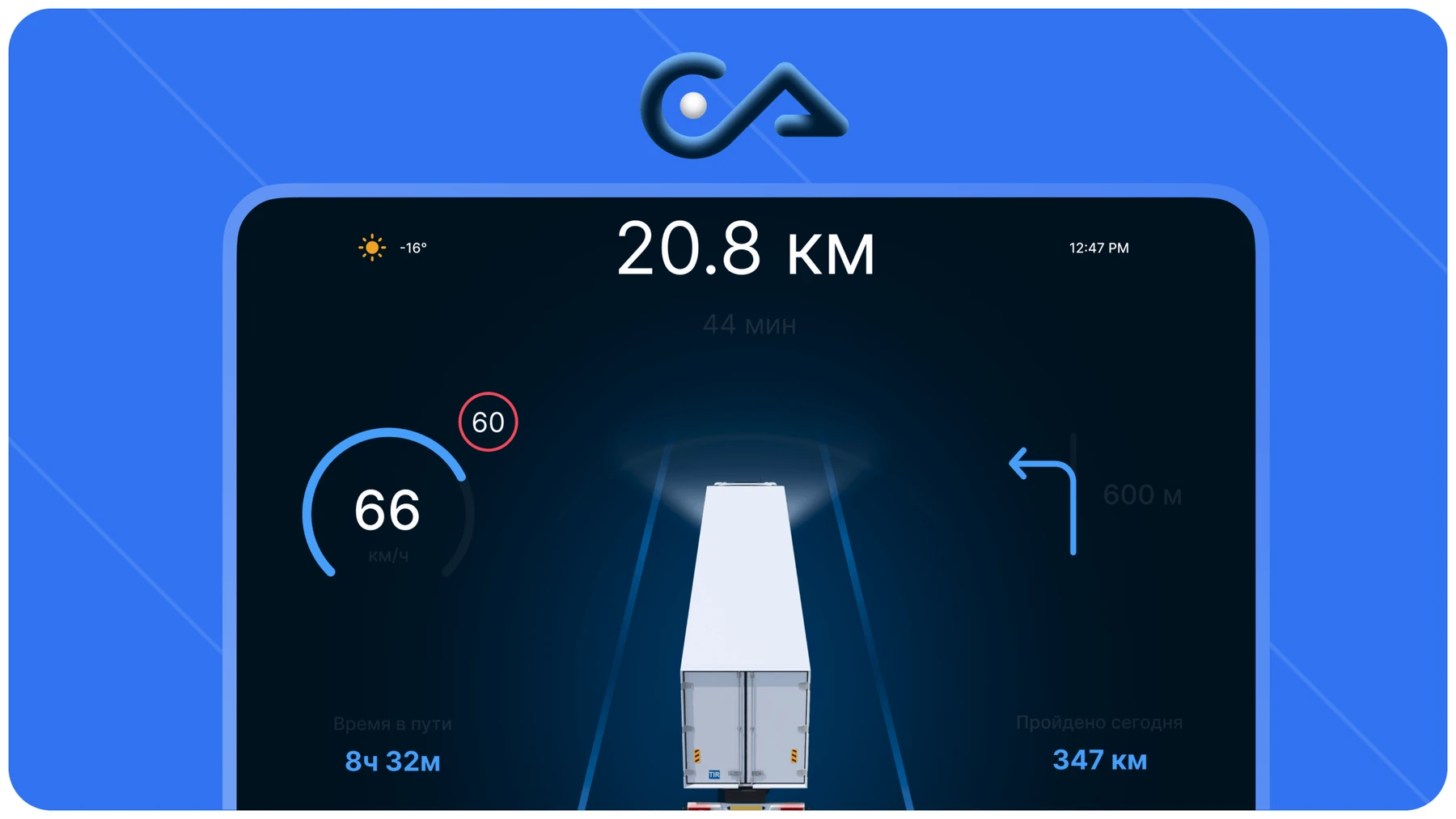
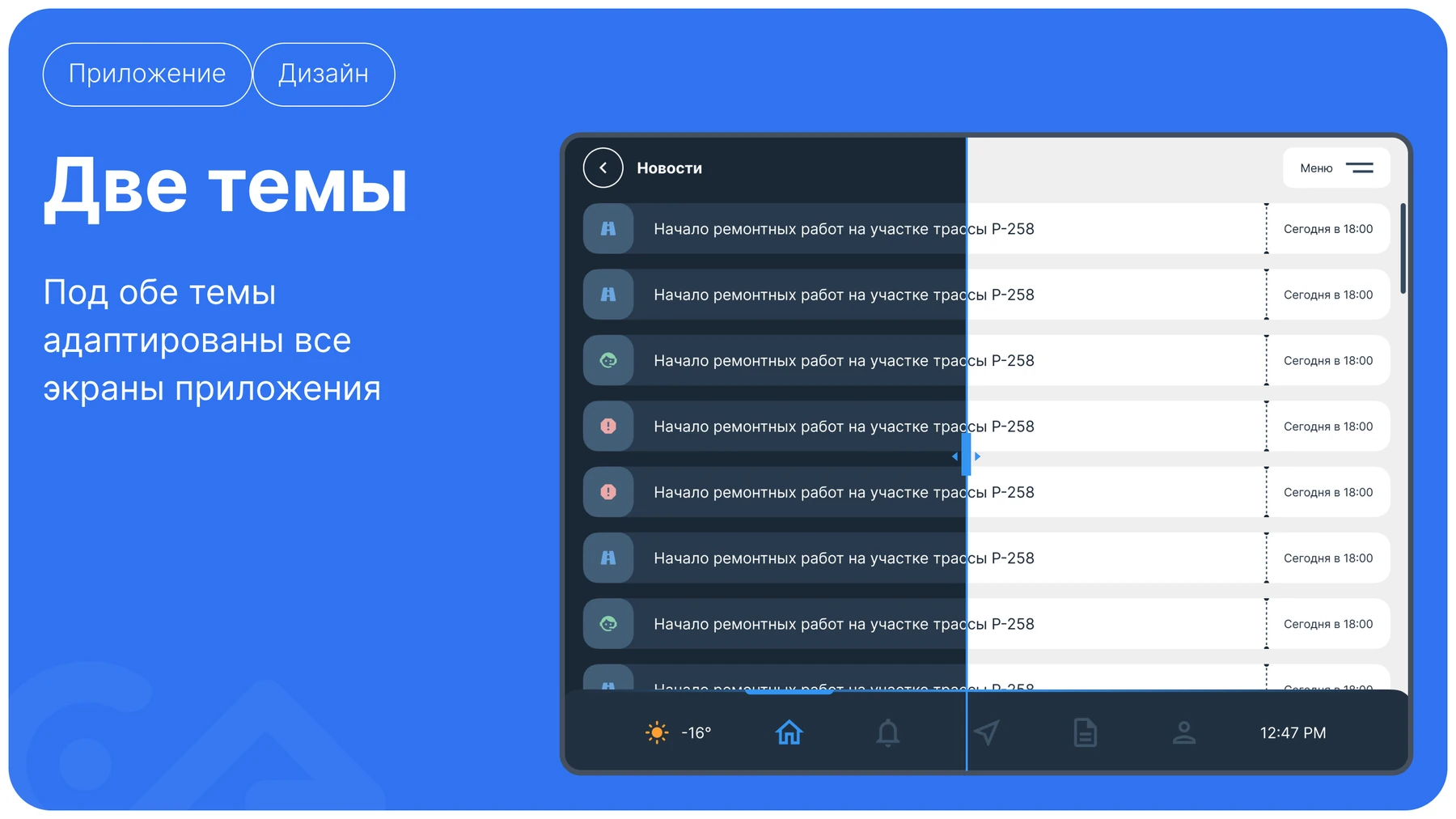
We designed large controls, readable type and bottom navigation for tablets, with light and dark themes. A Lottie truck animation shows key route information while waiting. After the MVP, driver feedback helped us improve disruptive notifications.
02 / Navigation for freight transport
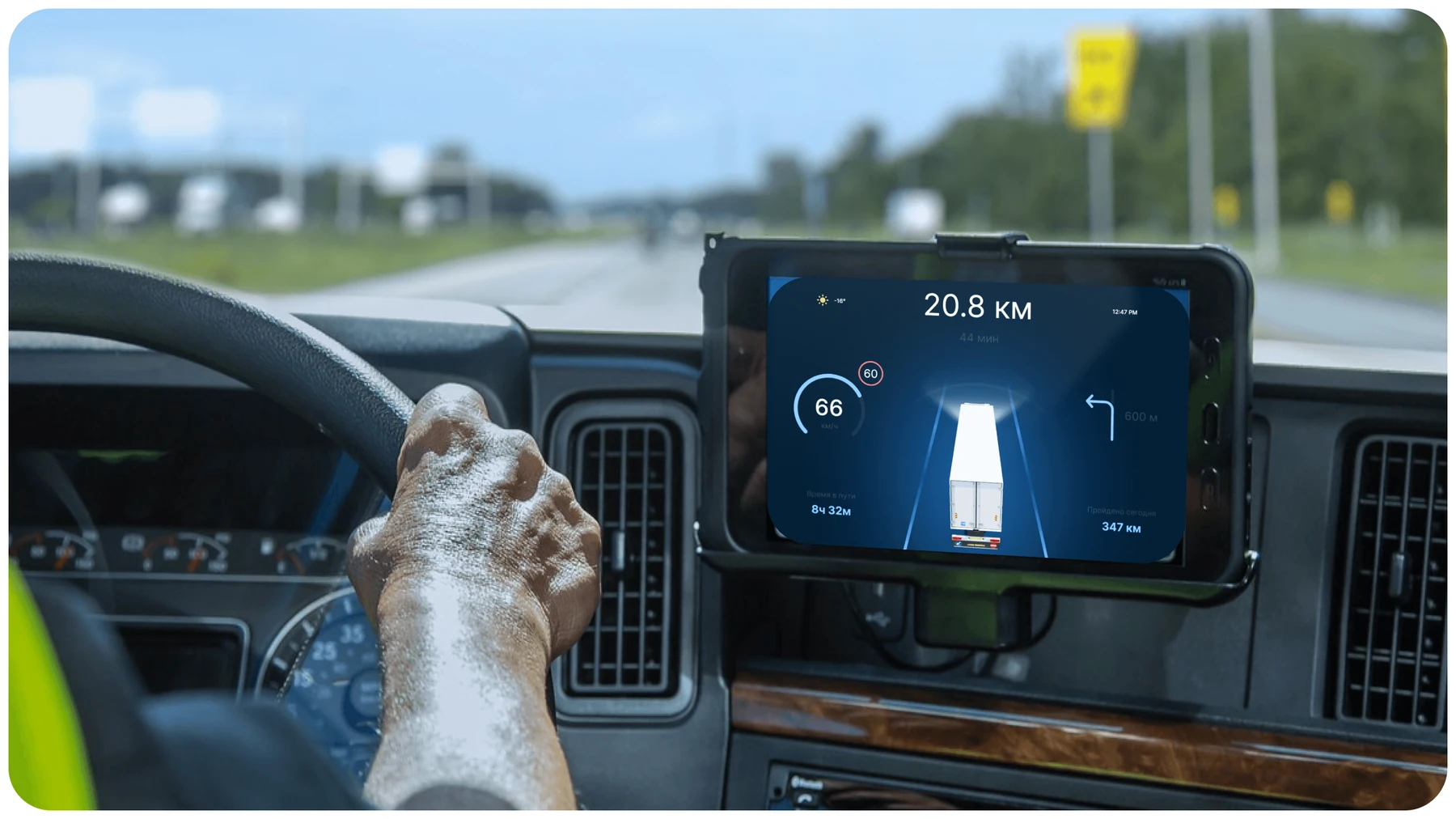
The React Native app uses Yandex MapKit. We implemented missing turn-by-turn features in Java and connected them to the app. GPS filtering corrects unstable positions relative to the road.
When a driver leaves the route, the marker changes to show the actual position. The route is recalculated on return. Dispatchers receive deviation and schedule alerts, while the map shows useful truck service locations.
03 / Bringing trip documents into the system
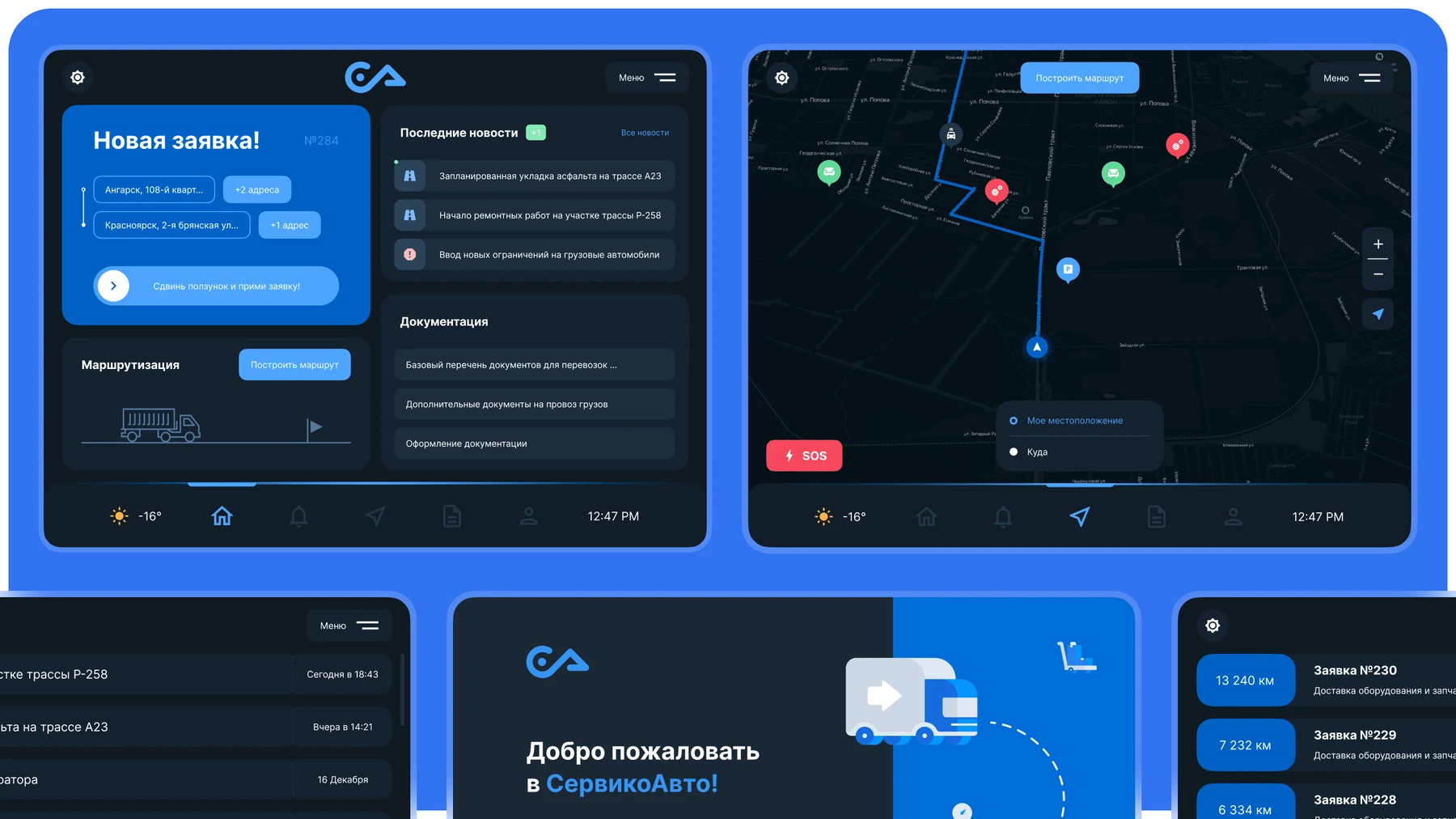
Drivers photograph documents with the tablet, save them in the app and send them to a manager. Offline, they can attach a file and mark progress to the next stage; the data is sent when connectivity returns.
We added chat, document templates and reference information. Dispatchers can message one driver or a group. ATI.SU provides road updates; fuel services and Road Network provide filling station and maintenance information.
04 / Testing in the emulator and on the road
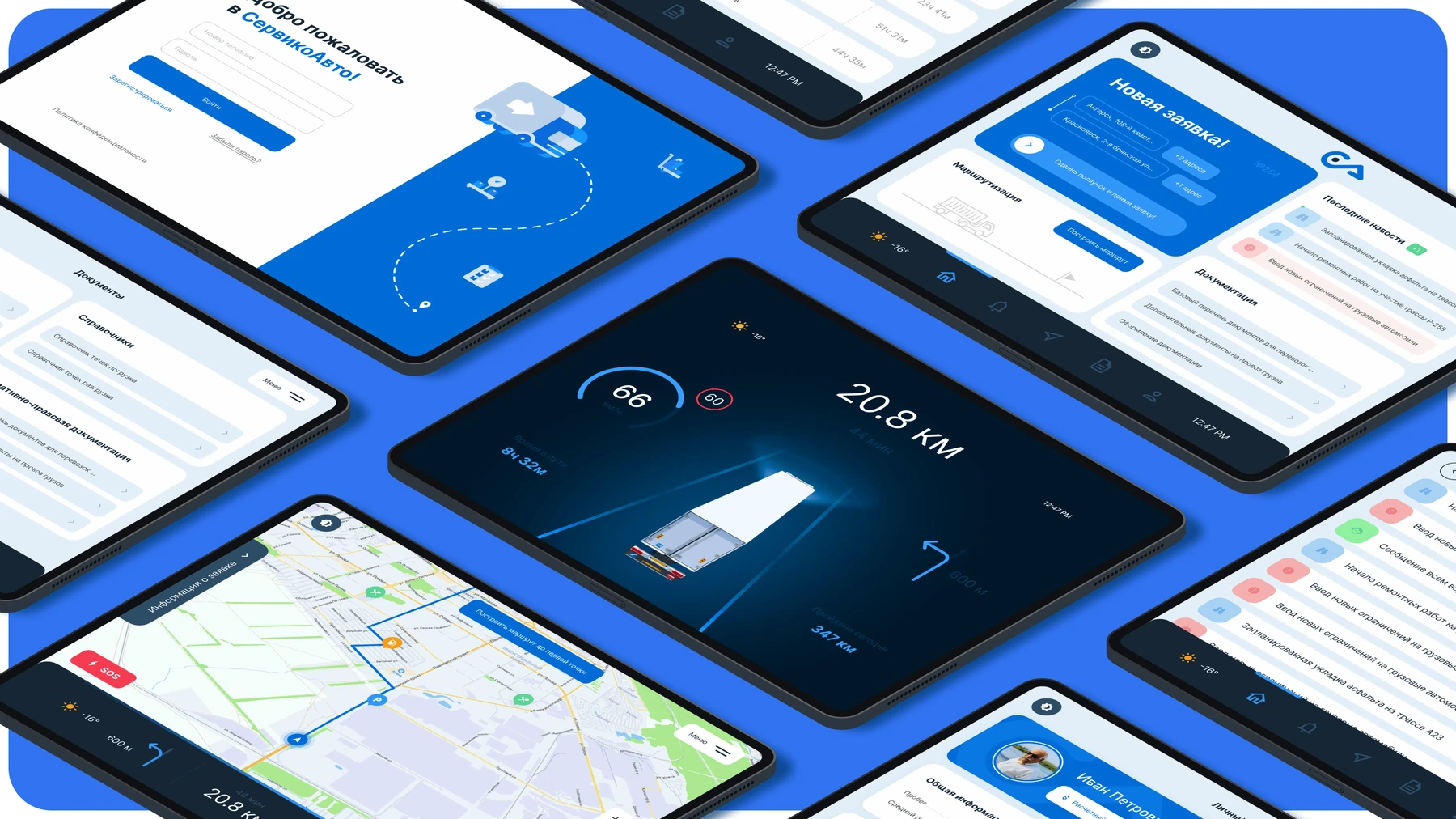
Navigation, assignments and notifications are closely connected, so we tested the whole app after adding features. Functional and regression tests covered simulated movement, deviations and rerouting in Android Studio.
We then bought the same Samsung tablets as the client and tested the app on the road. Development continued after launch: in 2024, we added average fuel consumption updates through 1C data exchange so drivers could see the figure in the app.
Results
Figures at the time the case study was published
Drivers and dispatchers gained a shared tool for trips, with routes, statuses, documents and messages in one system.
At the time of publication, around 40% of employees used the app daily. Development took 1,900 hours, and the team prepared 439 screens.
Documents can be submitted during a trip, while dispatchers receive route and schedule changes. Data entry continues during temporary connection loss.