Tarkett
We designed the interface and built the frontend of a flooring manufacturer’s ERP, working with the client’s backend team.
Figures at the time the case study was published
- Client
- Tarkett Rus JSC
- Our work
- Design audit · Interviews · UX/UI · Frontend development · Integrations
Project overview
Flooring manufacturer Tarkett used a desktop ERP with outdated technology and interfaces. It needed a new way for staff to manage tasks, materials, documents and reports.
We worked with the client’s team. Tarkett’s developers owned the backend and provided the API. We handled design and SAPUI5 frontend development, from researching workflows to building the interface and integrations.
The brief
The goal was to update the ERP interface while preserving familiar workflows. Staff already knew the old system, so major structural changes would complicate the transition. The new interface also needed to make sense to new employees.
We needed to organise large datasets, show business process lifecycles and connect everyday document tasks. The client’s component system provided the design foundation.
What we did
01 / Starting with real workflows
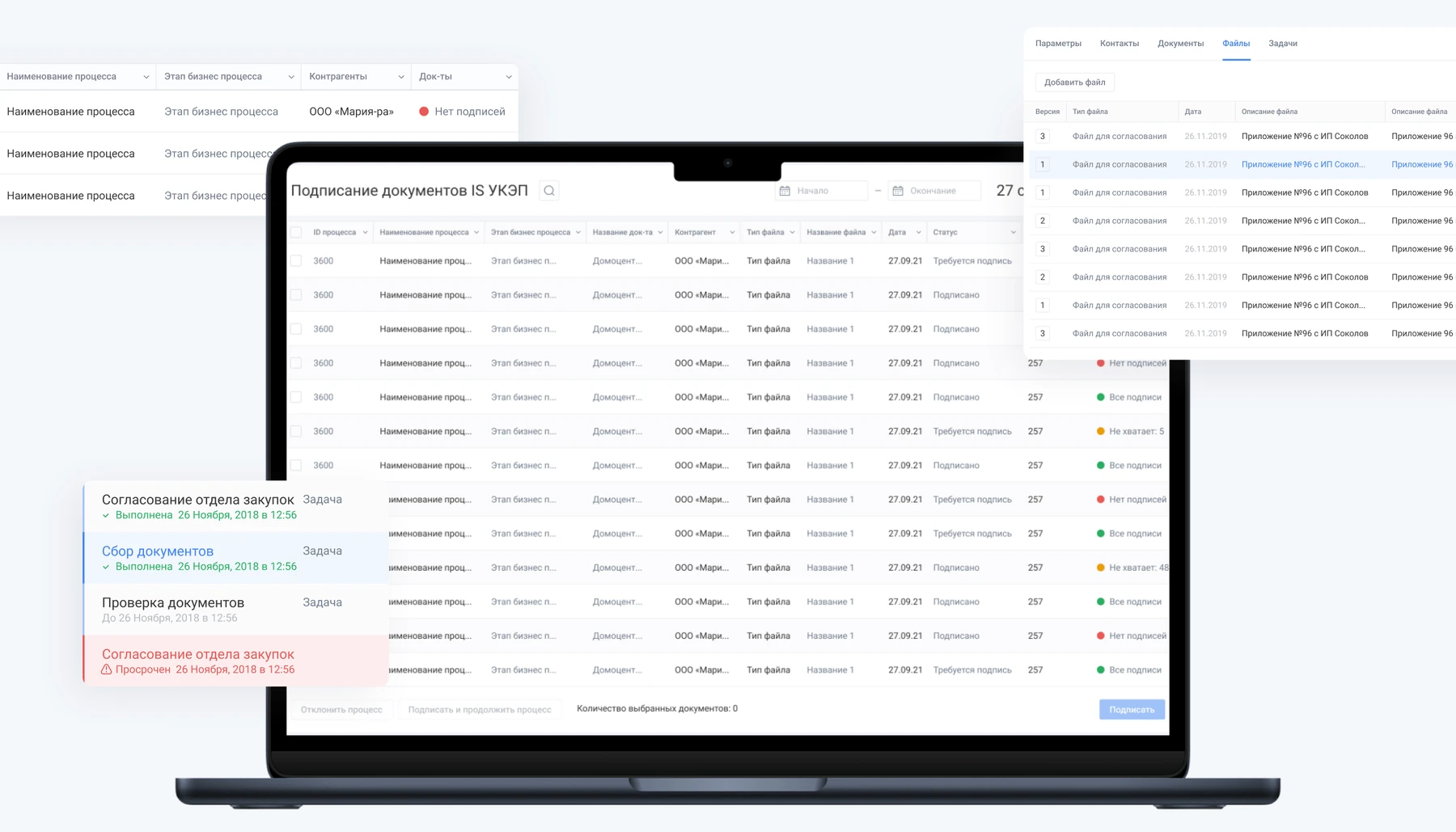
We audited the design and interviewed staff to understand their most-used data and task navigation. We retained familiar placement of the main sections and designed the interface states in detail.
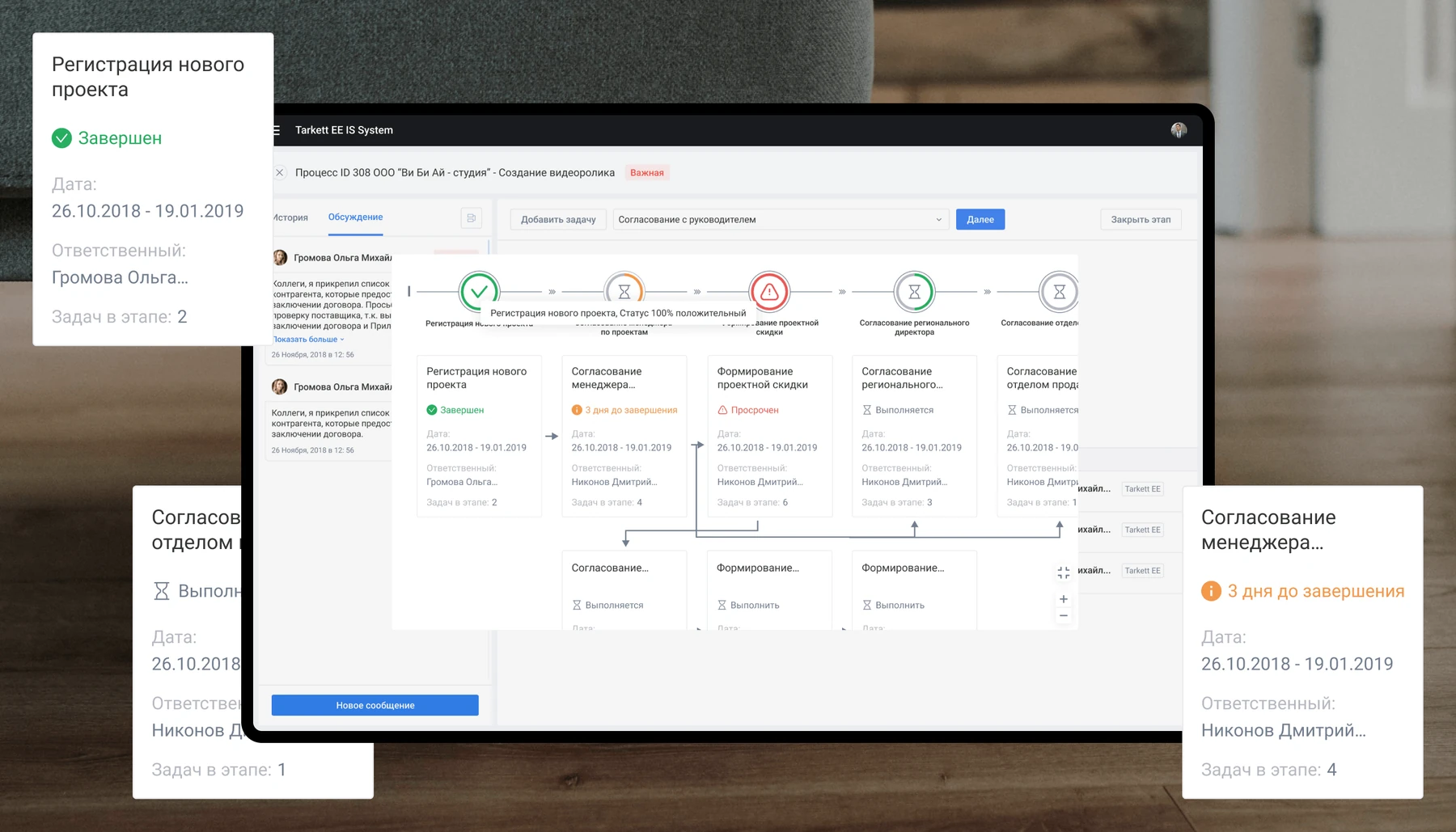
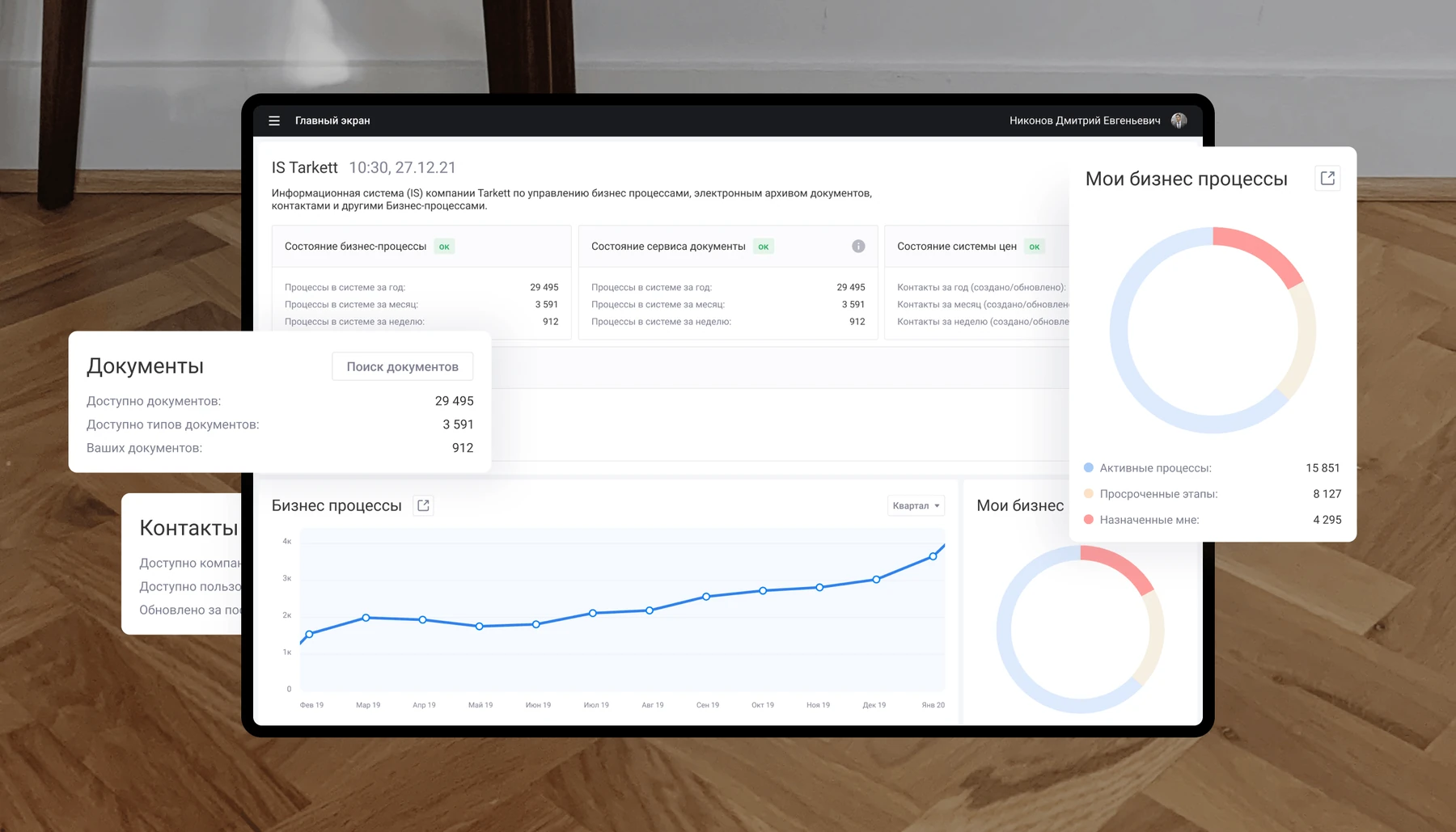
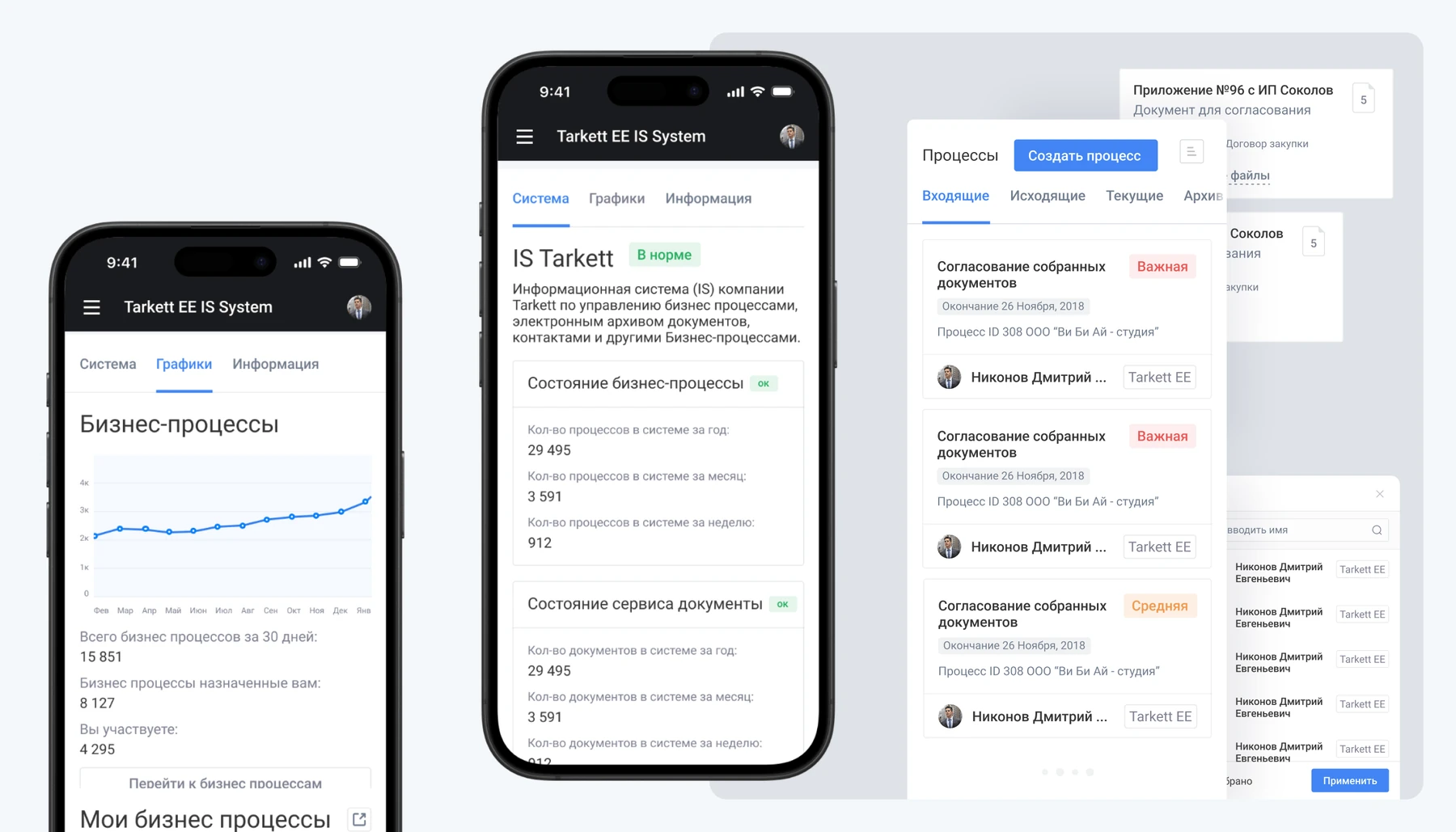
We prepared over 500 screens, state diagrams and transitions. A dashboard with process statuses and statistics became the entry point. We also built a responsive version for smartphones.
02 / Structuring data and processes
The ERP stores over 50,000 materials, often with similar properties. We built a custom catalogue where the sequence of design, category and SKU selection depends on material type. Users can start with the parameter most relevant to their task.
We paginated large lists to improve loading and browsing. Widgets and process diagrams show a task’s progress from creation to completion, helping managers identify stages that need attention.
03 / Connecting documents and communication
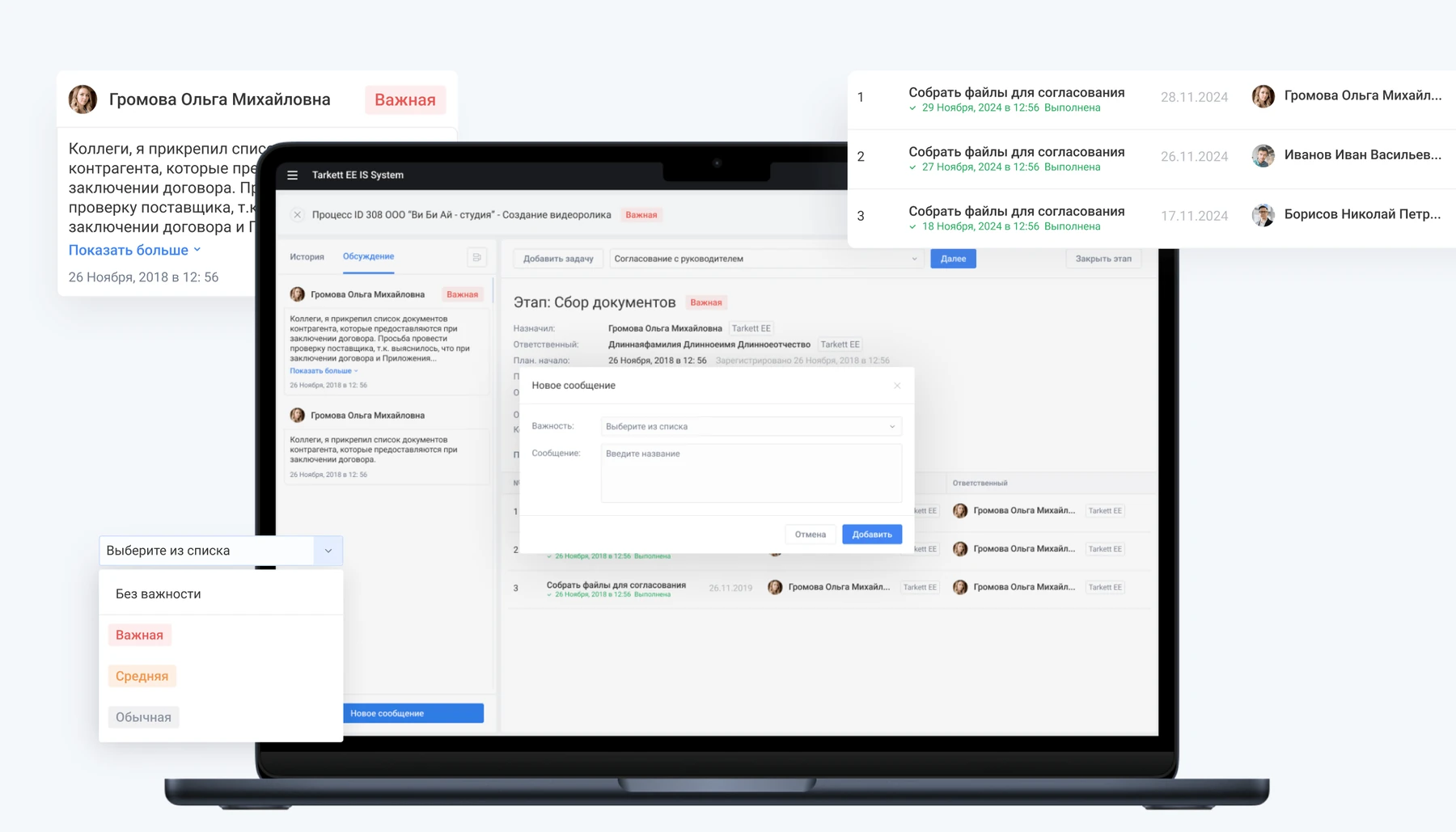
We added chats and document notifications. Users can share a link to a completed form so a colleague sees the same state, making it easier to check information or reuse it for a new process.
Document workflows support collaboration and uploads and downloads in different formats. CryptoPro integration creates and verifies electronic signatures, with document authenticity checks as well.
04 / Development and support
We implemented the frontend against Tarkett’s API using test-driven development: specifying expected behaviour before writing the code. We set up automated deployment and Sentry to detect errors and capture diagnostic information.
When access to SAP became restricted, we moved the framework into the local project environment, keeping the SAPUI5 version operational. After development, we continued with technical support.
Results
Figures at the time the case study was published
Together with the client’s backend team, we built an ERP covering around 118 business processes, from purchasing and logistics to HR and document signing.
Staff gained a single interface for tasks, materials, communication and document workflows. The dashboard provides process statuses and analytics.
Our contribution was design and frontend development: responsive layouts, catalogue, widgets, collaboration and integrations. Tarkett remained responsible for the backend.